She sits with her rolling chair turned slightly away from the desk, listening patiently as I explain my symptoms and current state of health. When I’ve finished, she smiles kindly. I’ve seen the smile a hundred times. Not on her. On the others.
“So, you’ve been diagnosed with . . .”
I repeat my diagnosed conditions, again, more slowly this time.
“I see. And where … ?”
Again, I tell her I’ve been treated in various countries: the US, Saudi Arabia, and now Oman. I remind her I also go to the university hospital.
“Oh, so you see Dr. Maha?” She looks up, as though my seeing this particular doctor provides evidence of the reality of my claims.
“Saw. I saw her. She discharged me from her clinic.” I say it as politely as possible, but I can feel the loathing inside. Let’s just say, it was a mutual discharge.
“Ahhhh,” she murmurs.
My husband is sitting on the examination table across from me, waiting for the doctor to say what all the rest have.
“Do you exercise?” she asks.
His eyes light up. Bingo!
“Not regularly. No. I hurt. All the time. Everywhere. Everything. All day long.” I’m there for a referral. But before I can get one, I have to play the game of, “You Should Lose Weight”.
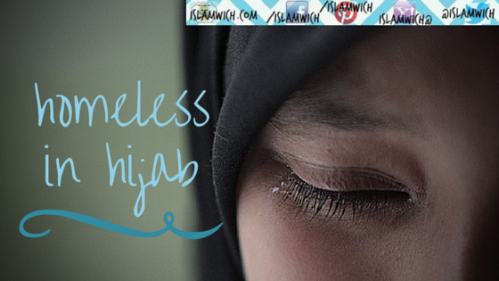
100% of the regular writers here at islamwich are Muslim. 100% of us are women. 66% of us have been, at one point or another, homeless Muslim women.
Let me tell you: it’s no party.
Recently, I had a Muslim convert come forward and tell her heart-wrenching story of homelessness as a Muslim woman, and I could relate all too well.
Here are just a few things we wish our fellow Muslims knew about what it’s like being homeless, female, and Muslim.
1.”But where is your family? And friends?”
Need we remind you about how much fun it is being a new convert and having most/all of your friends and family turn their backs on you? You can head on over to “Convert Central” for more on that.
Common sense would dictate, though, that if a person had any family or friends to turn to, they would surely have gone that route before appealing to a perfect stranger.
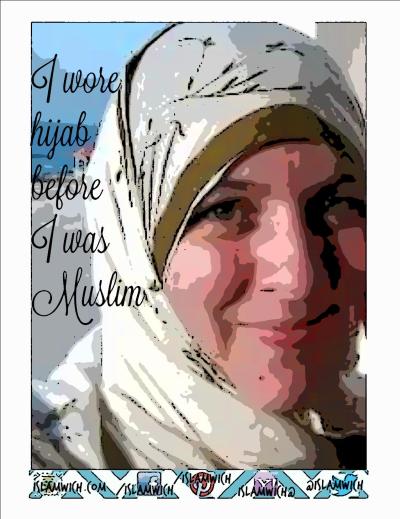
I wore hijab before I was Muslim. And I’m not the only one.
It turns out this is a thing. So much a thing, actually, that there are many women from many faiths coming forward proclaiming their love for hijab.
Here you can read about just one example of a woman who is not Muslim but chooses, of her own accord, to dress in ways that give the impression she is Muslim.
There is an entire movement of women both religious and non-religious who have begun covering their hair. You can learn more about them here, atWrapunzel. Read more ›
Much has been written about who speaks for Islam. There’s thisbook, cleverly entitled Who Speaks for Islam, by Dr. Esposito and Dalia Mogahed that discusses this exact topic. There isthis recent Pathoes blog post that tackles the topic as it pertains to Americans.
It is an interesting topic since there is no longer a central figure in Islam, thanks 1924 Turkish Republic. JK, we all know it was colonialism.
But I think it is also important to talk about who does NOT speak for Islam. Since it seems every (specifically non-Muslims) one in this anti-Muslim political landscape feels the need to talk about Islam, doing so without even knowing the first thing about the faith.
The tipping point for me was when I read that one of Trump’s crony’s told CNN that, “Islam is traced patrilineally. I am a Muslim if my father is Muslim,” speaking about the conspiracy theory that President Obama is a Muslim.
I don’t care what conspiracy you ascribe to, but this statement is categorically untrue and ignorant. If this were true of any faith, literally no one would be a follower of anything since its all starts with converts. Faith is not in your DNA, even though many never question the faith they inherit from their fathers.
But the need to talk about this topic has been building for a while. I find it absurdly arrogant and patronizing when non-Muslims feel the need to explain Islam to actual Muslims. It is a version of whitesplaining called Islamsplaining , and it’s exhausting.
So here is a list the kinds of people who often speak their ignorance about Islam without any authority or basis to do so. If you have listened to any of these sources about Islam, considered your information wildly inaccurate.
The Couch Theologian:
This person has never studied theology in any capacity, usually doesn’t even know much about his or her own faith. But s/he reserves the right to market him/herself as an expert on Islam because s/he watches the news. Because we allllll know that modern Middle Eastern politics is the end all be all of Islamic scholarship (insert massive eye roll here).
The True (meme) believer:
This person read a meme once and now believes s/he knows enough about a 1,400 year old faith to be an expert on the topic. Despite the fact that actual experts have studies their entire lives, memorized volumes of books, and sacred text and still consider themselves students. But one meme is enough, right?
The Contrived Phobe:
This is a person who has listened to a lot of anti-Muslim rhetoric. S/he has “studied” limited parts of Islam from other phobes, all with the intention of fearing and hating Islam and- more importantly- Muslims. S/he wouldn’t know a confirmation bias if it hit shim in the face. The Contrived Phobe regurgitates talking points, but if you scratch that surface, s/he doesn’t know anything about Islam in reality.
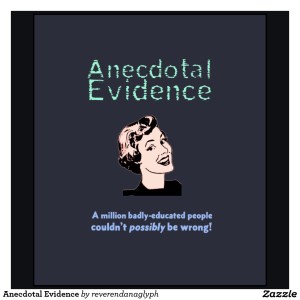
The Anecdotal Evidencer:
This is the person who starts off most conversations about Islam with “I once knew this Muslim who …” S/he takes everything that someone who looks like a Muslim does as Islam itself. They often think that if your religion is true, all the followers have to act like angels. But the Anecdotal Evidencer reserves the right to excuse all kinds of evil done by his/her own co-religionists.
source: storify.com
The Tourist:
This person resembles the Anecdotal Evidencer, but has more of it because s/he visited or lived in a majority Muslim country and thinks that the habits of the people s/he sees is Islam itself. But doesn’t think that the habits of the people in majority Christian countries is representative of Christianity.
The Pandering Politician:
This person has become very successful in a difficult profession, and wants all to believe that his expertise in that profession translates to expertise in all the things, including Islam. The politician tells lies about Islam to fan fears and gain political currency. It’s called pandering. Read more about this type here.
The Talking Head:
This person has a radio show or is the host of some Fox news program. They have and maintain high ratings because of the inflammatory ignorance they spew about people who do not look like them or are not from the same socio-economic stratosphere as them, appealing to the majority and exploiting their fears. They know that Islamophobia is trending so they jump on that scare tactic bandwagon to make more money and increase ratings. Their knowledge of Islam is similar too or less then (if that is even possible) the Coach Theologian.
The Fake Experts:
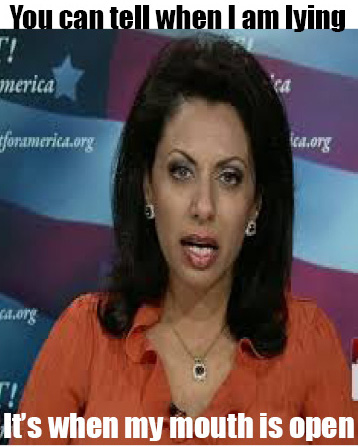
This is a person that poses in the media as an expert. They may fall into any of the other 6 categories, but have somehow convinced the media that they know more that the average bear, including actual Islamic scholars. But the truth of the matter is that they really do not know much. They are extraordinary pathological liars in that they believe their own lies so well that they have been able to market and sell them. Read more about this type here.
Hi, my name is Brigitte Gabriel. I only have a high school diploma but Fox News calls me an expert.
I am sure there are more of these types, so let me know which ones I missed.
Like the post, share it, pin it, comment on it, and/or do whatever social media magic it is that you prefer. Find out more about us in the understandably named “About” page and browse other posts in “Table of Contents”.
The need for answers is huge, as I discovered from last week’s Q&A post and from life in general.
So here are 5 more of your burning questions about Islam- and more- answered to the best of my ability.
Q1: Why are there so many different opinions on whether it is OK or not allowed for a husband to beat his wife?
A1: When thinking about subject matter of such importance, you have to wonder whether people are allowing their inner most desires to influence there verdicts rather that the truth. To be sure, the opinions of modern day imams are not being influenced by their desire, we need to go back to what the early scholars of Islam took as the Prophet’s Muhammad’s (Peace be upon him) meaning.
Taking into account that the Prophet (PBUH) never hit any woman, expressly forbade people to do so, and that the verse stating it is allowed can be translated very differently; any sane person can come to the conclusion that beating one’s wife is forbidden. Read more ›
From the time I started blogging, I have always welcomed questions about Islam, Muslims, or really anything. I was naive. After spending years wading through horrifying emails and comments on this blog and other places, I have realized that many people are not looking for answers to their questions.
They may frame an intense insult, curse, or horrifying suggestion as a questions, but they are not asking anything.
Many askholes are simply looking to express or validate their hate and ignorance to which they so desperately cling. To these people, I would like to say, the best I can do for you is ignore you.
But every now and then a questioner comes along that I feel is sincere. And I want to celebrate those questions and questioners as the bright spot in my writing adventure because the more real questions you ask, the closer we come to understanding each other and building stronger bridges.
So here are some real questions several different real people have asked in sincerity (edited for length) that I will attempt to answer to the best of my ability.
Q1: Why are you trying to convert everyone to Islam?
Being from the Southern United States, I grew up on certain staples that can be difficult to replace after converting to Islam: lots of processed junk food, questionable meat products and, of course, Lucky Charms. While my heart and gut are thankful for my (slightly) healthier diet now, it’s often hard to please my nostalgic taste buds when it comes to traditional family favorites.
Moving to the Middle East made it even trickier to reproduce these dishes due to lack of necessary ingredients. Sure, I can find halal items easily, but now I have limited access to brands I’ve grown up on.
Of course, the times when I get most foodly-sentimental are when I a) see a long-loved favorite in the grocery store that imports American items and b) around Thanksgiving. Sure, lots of expats (Americans living abroad) celebrate Thanksgiving over here in Oman.














 islamwich