Hey, fart faces (I use this term in the most loving way imaginable), I have been working on a very scientific study about marriage dynamics in an Islamic relationship (that mostly involves me thinking of stuff that goes on in my marriage and my cohorts’ marriages). And I have come up with a list of some aggravating and awesome things that come about when you marry a (religious) Muslim man.
Submitted for your approval, j/j submitted for my own amusement:
The Annoying Stuff
1. The Fart Fear
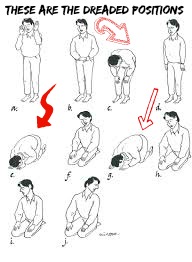
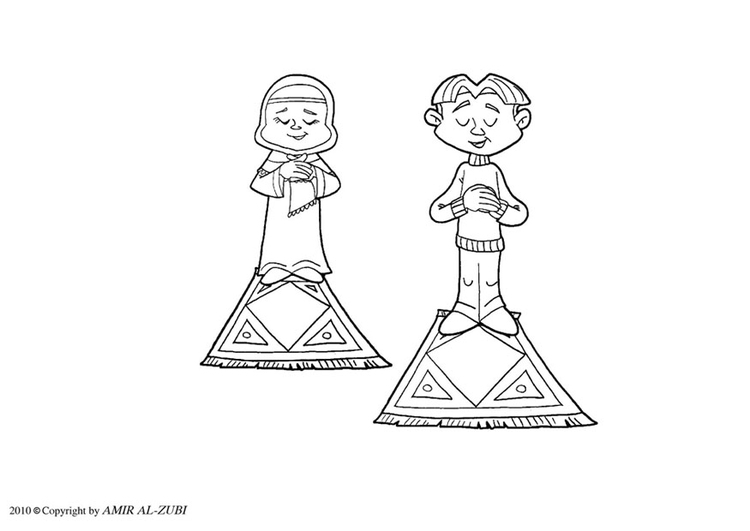
Ever since the first fart of the marriage-you can’t recall who broke the seal, but it happened, and all hell broke loose-you have a very distinct fear. It is irrational, but still haunts the Muslim wife Fajr to Isha (prayer times). It is the fear that his farting on you while on the couch or in the kitchen, or anywhere really, will extend to prayer times, since you stand directly behind him as he bends over and kneels, aiming his biological warfare directly at you.
It is irrational because prayer is probably the only time any Muslim man will do his best to keep it in the chamber. But still it is possible. And for that, many smart Muslim wives fear the fart and move their prayer rugs behind and to the side- out of mushroom cloud range.
2. Thinking Going to the Masjid is a “date”
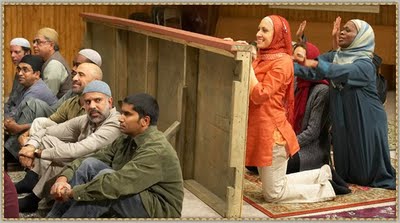
You know the convo. You say: Honey, we haven’t been out in a while. What do you say we have a date night? Then he responds: We went out just last week. Remember? We went to the masjid for that awesome lecture. I don’t know about you, but I do not consider sitting in separate parts of a building, listening to a religious lecture, a date. But he does. How Romantic!
Hey, Honey! I wanted to tell you how romantic this date is!
3. Finding Beard Hairs in Random Places
It is pretty gross to wake up and pour a delectable bowl of Fruit Loops only to find your man has been there. He has left one gross strand of face hair in your cereal bowl. The best part of waking up is NOT a beard hair in your cup (sung to the tune of the Folgers Coffee jingle).
Get your beard away from my cereal bowl!
4. Wudu Water EVERYWHERE!
Wudu or ablution is a big part of the Muslim man’s (and woman’s) life especially if he farts like I am pretty sure he does. He must be in a state of ritual purity to perform his 5 daily prayers (if one farts or goes potty, one has broken the state of purity and must make wudu). The problem is, come wudu time, he acts like he has been challenged by an ice bucket. And the bathroom counter, floor, and mirror bear the brunt of the water torture.
Wudu is NOT the ice bucket challenge.
5. Perpetual Love Goggles
This is similar to beer goggles that leads a man to believe a woman is more beautiful than she is when the eye of the beholder has had “one too many”. In the case of the Muslim man, the phenomenon happens when a man follows the dictates of the Quran about not ogling women. Your Muslim man does not check out women or compare them to you.
This can result in him never noticing when you gain weight, break out, or generally look like a hot mess. He thinks that
it’s a very professional look.
you are the most beautiful women at the end of the day when all he has looked at are (usually old and fat) dudes. The problem with this is that you really have no idea how you look and your sense of self worth becomes inflated. Not to mention how gross and mushy it is.
The Awesome Stuff
1. Perpetual Love Goggles
Your Muslim man does not check out women or compare them to you.
He thinks that you are the most beautiful women at the end of the day when all he has looked at are dudes. The inevitable result is that you really have no idea how you look and your sense of self worth becomes inflated!
2. He Smells Good
If women are the fairer sex, then men are the smellier sex. Don’t deny it. It’s science. But the great thing about a Muslim man is that he must wash his hands, arms, ears, feet, face and freshen his hair in order to pray. That wudu that left the bathroom looking like New Orleans after Katrina, has also left the Muslim man fresh and less smelly than the average bear. The Muslim man is also encouraged- as a religious tradition -to wear cologne, leaving your Muslim man smelling so fresh and so clean.
This can be dangerous if your man doesn’t follow the sunnah.
3.He Puts Up with Your Hair in Everything
When you wear hijab, something interesting happens. All of your shedding has to happen at home (the hijab keeps it contained and builds up the shedding potential). Once the hijab is removed and the bun is unfurled, the games begin. Your hair, that would have fallen out where ever you go, ends up all over your home: in shoes, on pillows, clinging to clothing fresh out of the dryer, in the cat’s mouth …
But he doesn’t complain about it like you do about his beard hairs in your cereal bowl. He understands.
Let the hairy games begin!
4. Having a Ride or Die Homie
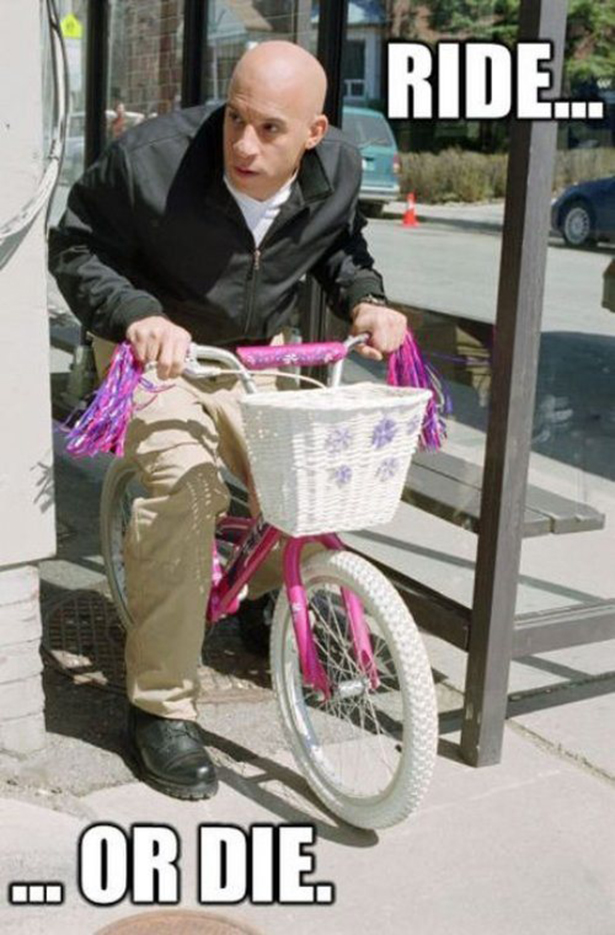
Having a Muslim husband means that you have someone who you know has got your back, someone who will conspire evil midnight doughnut runs with you during Ramadan (or any time really), someone who will warn you of hidden pork at your favorite restaurant, someone who will call up the brothers to come down and take care of anyone who disrespects you, even if they do roll up on their tricycles.
5. Having a prayer buddy
It is nice to hang with someone who knows you schedule your life around prayer and not prayer around your life. This is especially useful in the winter months when days are short and prayers come in almost every other hour and you want to plan a matinee movie around prayer times. Or when you are travelling and one of you takes look out while the other pops out a few rakat.
Much respect to all the Muslim husbands out there who strive to be the best to their wives.
Follow us (upper right of the page), email us (islamwich@yahoo.com), like our face with your face on Facebook, like the post, share it, pin it, and/or do whatever social media magic it is that you prefer. Find out more about us in the understandably named “About Us” page and browse other posts in the “Table of Contents”.
As some of you may know and many of you may not, November is
National Novel Writing Month (NaNoWriMo)
I know, I know. You may be thinking:
“Wait. . .what? Isn’t this islamwich? Where is the straightforward, no-spin, thought-provoking content I usually find?”
Have no fear!
For those of you who’ve been with us for awhile, you’re most likely no stranger to the eye-catching logo that crowns the top of the islamwich homepage. If you’re new, check it out. Go ahead. I’ll give you a second.
As you see, the goal of this blog is to reflect the diverse identities of not only the writers who contribute here, but also the unique characters who make up the Muslim population (or ummah) overall: one slice Muslim, one slice ‘merican, and all that comes between.
It is in this “between” area that I locate myself for this post. I am very much Muslim, alhumdulillah (all thanks and praise to God). I am also very much ‘Merican. Most of the time.
But besides these, I also align myself with a very prominent identity that is in part fulfilled by my (occasional) contributions to this blog: writer.
Sure, you’re thinking:
“Well, of course you’re a writer. I’m reading what you write. Right now.”
True. But that doesn’t make me a writer. There are tons of bloggers who blog as a hobby, but their interests, careers or jobs reflect otherwise. Like cooking. Full-time parenting. Home-schooling. Photography. Auto mechanic. Everyday-run-of-the-mill-genius-extraordinaire.
And, if merely judging by my career (thus far), you would probably define me as a teacher. If I’m lucky, you’d specify “writing teacher”. But that’s what actors refer to as “my day job”.
Yet, how I identify myself and define my purpose is writer.
Forget that my graduate degree is actuallyin writing. Forget that I’ve been typing (or penning) words on paper since as far back as I remember. Forget that the voices in my head can usually be attributed to unfinished (or not-yet-started) conversations between usually-unmet characters.
Writing is how I live my life. It is how I deal with my problems. It is how I express my beliefs, connect to others, bridge the gap between the introvert I know I am and the extrovert I sometimes pretend to be. How I glorify my God because He blessed me with the ability to string words together in a somewhat-convincing and creative manner. Without writing, I lose my mind.
Literally.
After going a period of time without writing, my vocabulary dwindles. My ability to express thoughts becomes mangled. The inner solace I find simply by releasing emotions I don’t feel comfortable with voicing dissipates. Writing is my release. It is my therapy. My outlet.
But most of all. Writing is my advocate.
How can something intangible be an advocate?
Simple:
Because my writing supports my mental health, it is my counselor.
Because my writing improves my vocabulary and forces me to thinks logically, practically, rationally, it is my teacher.
Because my writing represents me and holds my truth, it is my representative.
Because my writing shares with others what I might not be able to express otherwise, it is my backer.
Because my writing bridges gaps between myself and others, it is my intercessor.
And as a writer, I know the positives engaging in this often-marginalized activity can produce.
Which is why I am advocating for YOUR participation in National Writing Month.
Now, I know it is November 15th – and yes, National Novel Writing Month is halfwayfinished. But that doesn’t mean you can’t get started. Who knows? Perhaps you will break the dam that holds back your fountain of prose.
Don’t know what to write about? I suggest choosing something that is important to you:
If you’re a revert, write about your “transformation” into a Muslim
If you’re not a revert, write about your life growing up Muslim in a non-Muslim country
If neither applies, write about a topic that is dear to your heart – fiction, nonfiction, it doesn’t matter
And if you don’twrite, you can still participate.
See, National Novel Writing Month isn’t just a trend where people slack off from work and focus on their would-be best-sellers (I wish!). The organization is also a verified 501(c)(3) non-profit that supports various writing advocacy programs, such as Young Writers Program. Additionally,
National Novel Writing Month organizes events where children and adults find the inspiration, encouragement, and structure they need to achieve their creative potential. Our programs are web-enabled challenges with vibrant real-world components, designed to foster self-expression while building community on local and global levels.
Therefore, NaNoWriMo participants are also encouraged to act as fundraisers in support of NaNoWriMo’s mission.
And this is where you come in.
You may not be a writer. You may not even like to read (other than islamwich articles!). But hopefully, you can agree with and understand the importance of advocating for literacy and self-expression among children and adults in both local and global communities.
To learn more about how NaNoWriMo contributes to creative development worldwide and/or donate to this cause, you can visit Stephanie’s NaNoWriMo Fundraiser.
Note: All donations go directly to NaNoWriMo for disbursement via the 501(c)(3)’s regulations.
Follow us (upper right of the page), email us (islamwich@yahoo.com), like our face with your face on Facebook, like the post, share it, pin it, comment on it (Sorry, due to the significant increase in hate messages I have received over the past month, comments are currently closed.), and/or do whatever social media magic it is that you prefer. Find out more about us in the understandably named “About Us” page and browse other posts in our brand spanking new “Table of Contents”.
When you think of “Islamic Nations”, if you are like the majority of people in the West (or even elsewhere, for that matter), the Middle East likely comes to mind. You might, alternatively think of nations like Afghanistan, Pakistan, or Indonesia and Malaysia. But one thing you likely do not envision as “Islamic” is the West.
A new study, however, has concluded that the Qur’an’s teachings are, in fact, better represented in Western societies than in predominantly Islamic countries. The reason, is that countries with significantly Muslim populations have overtly failed in embracing the values of their own faith in the spheres of politics, business, law and society, according to a leading academic at George Washington University.
The study produced an analysis of 208 countries and territories. It concluded that the top countries in both economic achievement and social values are in fact Ireland, Demark, Luxembourg and New Zealand.
We don’t find a predominantly Muslim nation is the running until we get to Malaysia, with a ranking of 33. The only other state to make it into the top 50 is Kuwait, coming in at 48.
Hossein Askari, an Iranian-born professor of International Business and International Affairs at George Washington University, explained that Muslim countries simply use religion as an instrument of state control, but are not any more Islamic than anywhere less. If the study at hand is to be believed, they are certainly much less so.
Askari explained: “We must emphasize that many countries that profess Islam and are called Islamic are unjust, corrupt, and underdeveloped and are in fact not ‘Islamic’ by any stretch of the imagination.
“Looking at an index of Economic Islamicity, or how closely the policies and achievements of countries reflect Islamic economic teachings – Ireland, Denmark, Luxembourg, Sweden, the United Kingdom, New Zealand, Singapore, Finland, Norway, and Belgium round up the first 10”.
“If a country, society, or community displays characteristics such as unelected, corrupt, oppressive, and unjust rulers, inequality before the law, unequal opportunities for human development, absence of freedom of choice (including that of religion), opulence alongside poverty, force, and aggression as the instruments of conflict resolution as opposed to dialogue and reconciliation, and, above all, the prevalence of injustice of any kind, it is prima facie evidence that it is not an Islamic community,” he concluded.
Follow us (upper right of the page), email us (islamwich@yahoo.com), like our face with your face on Facebook, like the post, share it, pin it, comment on it (Sorry, due to the significant increase in hate messages I have received over the past month, comments are currently closed.), and/or do whatever social media magic it is that you prefer. Find out more about us in the understandably named “About Us” page and browse other posts in our brand spanking new “Table of Contents”.
I often wonder if Islamophobes and Islamic extremists realize that they are just different sides of the same coin.
They both promote fear and hatred of large groups of diverse peoples. Both groups wish to sweep as many people up in their seriously dangerous causes. They both want war, and use any manner and means to get it, including promoting a distorted view of Islam. They take verses out of context and employ weak or questionable hadith (sayings, actions, or approvals of the Prophet) to reach their own political ends.
If I have one hope for society, it would be that these groups can go off and deal with each other and leave the rest of us, the majority of us, to live in peace and cooperation, free from their detrimental rabble-rousing. I hear that Antarctica is nice this time of year. Maybe they can snuggle up together for warmth and find some common ground in the fact that we are all human beings.
What follows is a sampling of Quranic verses reductionists and hate mongers love to take out of context. Now put back into context.
1. Qur’an 5:51—O you who believe! do not take the Jews and the Christians for friends; they are friends of each other; and whoever amongst you takes them for a friend, then surely he is one of them; surely Allah does not guide the unjust people.
In this verse, the words “Awliya”- plural- or “wali” – singular- has been (badly) translated as “friends” or “friend”; however, the more appropriate translation would be a “guardian, protector, or advocate”. Muslims are to be advocates and protectors for each other. And friends with everyone.
Prophet Muhammad (peace and blessings be upon him) was kind to the pagans of Mecca and fought them only when they fought him. He made treaties with the Jews of Madinah and honored the treaties until they broke them. He received the Christians of Najran with kindness in Madinah. They argued with him about Islam, but he treated them with honor and respect. 1
Some translate this verse to mean that Muslim should not take the Jews and the Christians for friends who are exclusively friends of each other at the exclusion and detriment of the Muslims, as is seen in Zionism and the Islamophobic lobby.
2. Qur’an 8:12— Remember thy Lord inspired the angels (with the message): “I am with you: give firmness to the Believers: I will instil terror into the hearts of the Unbelievers: smite ye above their necks and smite all their finger-tips off them.”
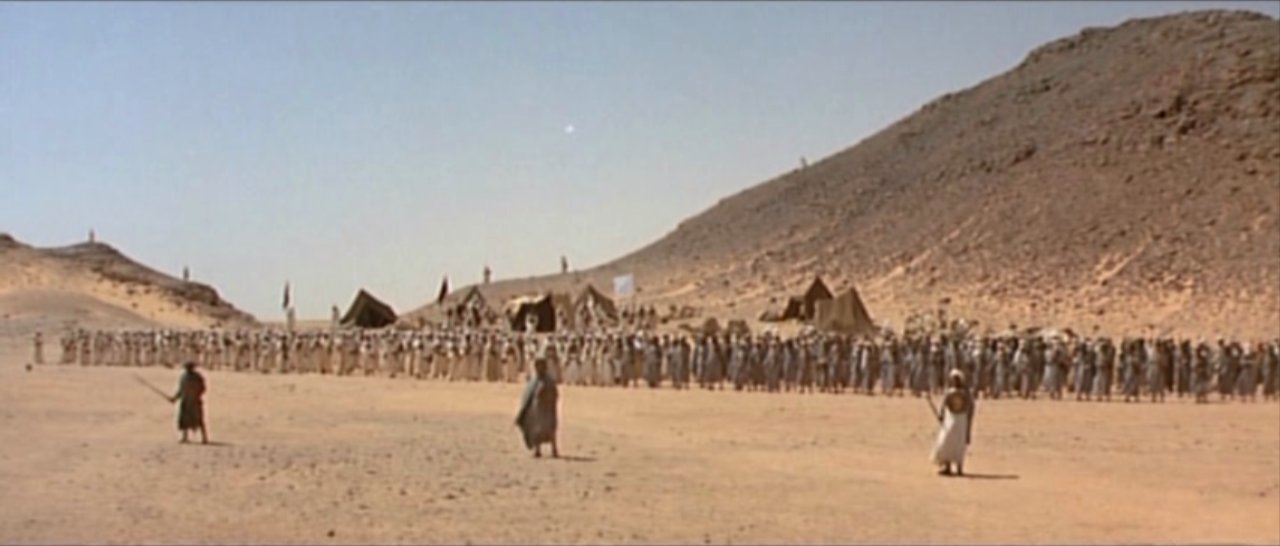
This verse was revealed about the Battle of Badr. The pagans of Mecca travelled more than 200 miles to Madinah with an army of about 1000 to kill the Muslims who numbered around 300. The Prophet Muhammad and fellow Muslims had suffered severe persecution, torture and even murder of their brethren for 13 years in the city of Mecca at the hands of these very same pagans.
And once the Muslims had fled Mecca and found a sanctuary in the city of Madinah, they were followed by the pagans of Mecca. By this verse God gave the order to Muslims to fight to defend their lives and faith, as they had previously been forbidden from defending themselves. 2
Another verse in the same chapter (8:61) that is often overlooked states:
But if the enemy incline towards peace, you (also) incline towards peace, and trust in God: for He is One that hears and knows (all things).
Another oft-ignored verse is Qur’an 2:190:
Fight in the cause of Allah those who fight you, but do not transgress limits; for Allah does love not transgressors.
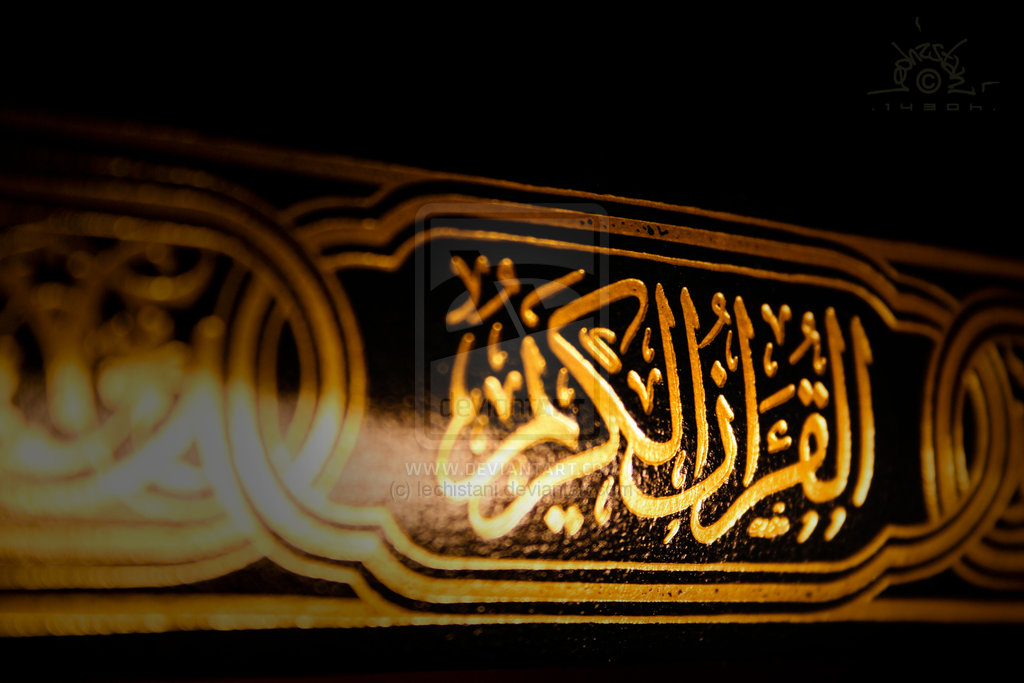
quran.karim by lechistani
3. Qur’an 9:29—Fight those who believe not in Allah nor the Last Day, nor hold that forbidden which has been forbidden by Allah and His Messenger, nor acknowledge the Religion of Truth, from among the People of the Book, until they pay the Jizyah (tax) with willing submission, and feel themselves subdued.
&
4. Qur’an 9:73—O Prophet! strive hard against the unbelievers and the hypocrites and be unyielding to them; and their abode is hell, and evil is the destination.
These verses are also historical in context. They are about the Battles of Mu’tah and Tabûk.
These verse were in reference to The Byzantine Empire instigating war against the Muslims. They murdered an ambassador of the Prophet (pbuh), who was carrying a message to the ruler of Busra. The Chosroe of Persia even ordered his commander in Yemen to kill the Prophet, and they mobilized their forces to fight the Prophet. The Muslims confronted them. 3 & 4
There are many people who throw hissy fits about the Jizyah (a tax on non-Muslims living under the protection of a Muslim authority), mentioned in 9:29, saying that it is discriminatory. But the truth is that Muslims are not exempt from taxes, they just go by a different term.
The tax collected from non-Muslims is only imposed on adult males. It exempts them from military service; affords them protection under the law; and freedom to practice their religion. And Muslim taxes go to welfare programs.
Also, in the same chapter (9) Verse 6 God tells the Muslims:
And if any one of the polytheists seeks your protection, then grant him protection so that he may hear the words of Allah. Then deliver him to his place of safety. That is because they are a people who do not know.
5. Qur’an 9:111—Surely Allah has bought of the believers their persons and their property for this, that they shall have the garden; they fight in Allah’s way, so they slay and are slain.
But they omit the rest of the verse:
[It is] a true promise [binding] upon Him in the Torah and the Gospel and the Qur’an. And who is truer to his covenant than Allah? So rejoice in your transaction which you have contracted. And it is that which is the great attainment.
Why would they leave off the part about this promise being found in the Torah and the Bible?
This verse again, is applicable to the Muslims during the time of the Prophet – historical Muslims – who were terrified of fighting in the battles to defend themselves because they were out numbered. 4.2
God bolstered their bravery by assuring them that they would be rewarded.
outnumbered and out-sworded
6. Qur’an 9:123—O you who believe! fight those of the unbelievers who are near to you and let them find in you hardness; and know that Allah is with those who guard (against evil).
This verse is speaking about the hypocrites who were among the Muslims in the time of the Prophet (pbuh). The “unbelievers who are near you” were, in actuality, non-Muslims posing as Muslims who sought to corrupt the believing Muslims from within. The instruction was to fight them (here, “fight” means to resist the hypocrites’ skepticism, as we will see in the next verse) without preferential treatment for the social or economic standing. 5
The next verse (9:124) calls them what they really are:
And whenever a new chapter is revealed some of the hypocrites ask the believers (in jest): “Whose faith has increased because of this?” As for those who believe, it will certainly increase their faith, and they are joyful over that.
7. Qur’an 48:29—Muhammad is the Messenger of Allah, and those who are with him are severe against disbelievers, and merciful among themselves.
Once again the “disbelievers” in the verse refers to those who persecuted and attacked the Muslims. This is not a verse directing Muslim to just go out and just be awful to non-Muslims. 6
In fact there is a lot in the Quran and hadith collections that command Muslims to be compassionate and kind to all of God’s creation. One such hadith states: Whoever is deprived of gentleness is deprived of all good. (Muslim, Abu Dawood)
It is also reported by Abu Dawood (a hadith collection) that the Prophet (pbuh) said, “Beware! Whoever is cruel and hard on a non-Muslim minority, or curtails their rights, or burdens them with more than they can bear, or takes anything from them against their free will; I (Prophet Muhammad) will complain against the person on the Day of Judgement.”
8. Qur’an 98:6—Verily, those who disbelieve from among the people of the Scripture and Al-Mushrikun will abide in the Fire of Hell. They are the worst of creatures.
One of the basic teachings of Islam is that God does not have a favorable opinion of those who knowingly deny His right to be worshiped alone (as He alone is responsible for our creation, our sustenance, and our judgement) and reject any of His messengers.
This is not to say that there will be conveyor belts for each religion, and we just jump on and go to either Heaven or Hell according to what we call ourselves. Each person will be judged based on their understanding of God’s message, as well as his or her capability and intentions to follow the path to God as best he or she could.
Muslims are not allowed to say that someone will go to hell just because they call themselves a Christian, Jew, or Polytheist. Muslims are not allowed to speak without knowledge. And each person’s destination in the Hereafter is known only to God.
It is interesting to note that some people of different faiths insist on telling everyone who does not go to their specific place of worship that they will certainly be going to Hell (knowledge they do not have). But when they see this verse, they are upset by it.
9. Qur’an 5:101-102—O ye who believe! Ask not questions about things which, if made plain to you, may cause you trouble. But if ye ask about things when the Qur’an is being revealed, they will be made plain to you, Allah will forgive those: for Allah is Oft-forgiving, Most Forbearing. Some people before you did ask such questions, and on that account lost their faith.
This is in reference to those who asked useless questions about revelation. If all their questions were answered, it would have made the duties of faith more specific and, therefore, more difficult to perform. There is mercy in leaving questions alone and specifics unspecified. 7
In Chapter 2 of the Qur’an, when the Children of Israel were told to slaughter a cow, they began to ask useless questions about what type of cow. All the questions were answered to the point that it became very difficult for them to find such a cow. If they had not asked, any cow would have been acceptable.
Useless, petty questions are just a stalling tactic; ask any mother or teacher. But asking honest, sincere questions to clarify matters of faith is, in fact, encouraged.
Every prophet faced people wanting to kill him and his followers. The Prophet Muhammad was no different in facing enemies. However, the Muslims were not only establishing a faith, they were establishing a nation. And because of this, the Muslims, after years of persecution in Mecca, were permitted to defend their lives, their faith, and their nation from attack. Just like any other person or nation has the right to do.
However, even in war, Islam demands that morals be upheld. Muslims are forbidden form killing children, women, the old, the infirm or any one who is not fighting against them. Even combatants have rights. (“I”SIS must have skipped this class) Rules of engagement here: http://www.islam101.com/rights…
There is a certain methodology to interpreting the Quran that God speaks about in the Quran itself (that Islamophobes and Extremists dismiss). The Quran, in several places, warns its reader about distorting its meaning, concealing parts of it, or using it for ones own personal/worldly/political gains. In these verses, God is warning Islamophobes and Extremist alike. Because, as we well know, distorting religious texts has disastrous effects.
Indeed, they who conceal what Allah has sent down of the Book and exchange it for a small price – those consume not into their bellies except the Fire. And Allah will not speak to them on the Day of Resurrection, nor will He purify them. And they will have a painful punishment. 2:174
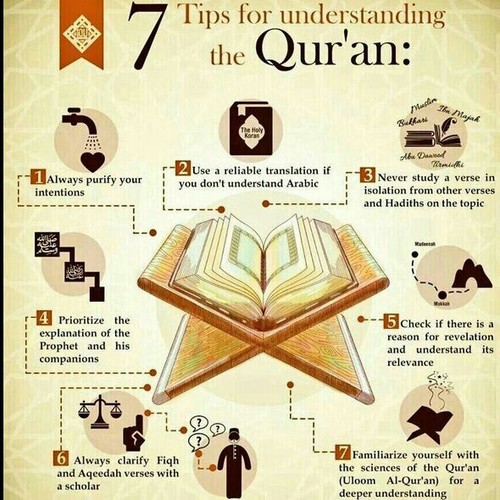
How to Understand the Quran
Follow us (upper right of the page), email us (islamwich@yahoo.com), like our face with your face on Facebook, like the post, share it, pin it, comment on it (Sorry, comments are currently closed. You can thank the trolls for that. And while you are thanking them, tell them to go back and live under the bridges from whence they came), and/or do whatever social media magic it is that you prefer. Find out more about us in the understandably named “About Us” page and browse other posts in our brand spanking new “Table of Contents”.
Written by Theresa Corbin, co-authored by Saadia Haq
A Voice from the West
Recently I have gotten a lot of heat for identifying as feminist and a Muslim. I did it very publicly so I am not surprised at the response. I am however, surprised that purported feminists had such a problem with my identity they have gone so low as to call me- a fellow woman they have never met or spoken to- a stupid cow (because having and exercising my basic human right to choose my religion makes me a farm animal), a moron, an attention seeking … fill in the blank …
Aaaand these “feminists” have even perpetuated a harmful female stereotype, by saying that my identity is the result of daddy issues, as if everything a woman does must have something to do with a male relationship- there is no emoji that exists that can express how massively I would like to roll my eyes at this.
But the lack of support-and virulent abuse-I received from my fellow “feminist” was so hideous that it made me wonder what exactly they think feminism is. I know for sure they had no idea what being a Muslim meant outside of what they hear about Muslims and Islam on the news, stereotypes, or from Islamophobic talking heads and reductionists (terrible sources, y’all!).
Then I realized that these ladies (and some men) were only upset because I challenged their misconceptions about what it means to be a Muslim woman, what is means to be a feminist, and by doing so I challenged their very identity (we often define ourselves by negation and not being validated pisses insecure people off). I realized this because I understand the rhetoric in American society and Western culture at large that Islam = bad for women.
The reason I realized this was because I too had many of the same misconceptions about Islam that these people have. That was before I knew what Islam is. You see, it is hard not to carry around these misconceptions when on a daily basis you are receiving messages from everywhere that hijab is a tool of oppression, that Muslim men are somehow more violent and domineering than their Western counterparts and that Islam is just more oppression of women under the guise of religion.
While there are problems that women face in terms of dress, male dominance and religion being used as a tool for oppression (that Muslim feminists are addressing), it is a fallacy to think that these things are only Eastern or Muslim problems as we see them play out daily among non-Muslims in the West. But the stereotypes persists and are amplified of late.
The roots of these stereotypes come from Orientalists’ intentionally mutilated understanding of Islam. And its feminist roots were planted by women like Carrie Chapman Catt and Aletta Henriëtte Jacobs, who travelled the world to unite women in the cause of equality and they should be celebrated for their efforts. But these ladies and many women like them couldn’t get over their own superficiality and arrogance. When they saw Muslim women dressing modestly in hijab, they took it as proof that men were using all they could including clothing to control women.
These feminists clung to their Orientalist understanding of Islam (some say it was only propagated to create reasons to colonize Muslim countries. i.e. Christianity good/Islam bad therefore, the more “advanced” Western Christians must “rescue” people from their “backwardness”) and they never once thought to ask the Muslim women why they cover their bodies the way that they do. Or even if it was something that Muslim women wished to do of their own accord. No, they just assumed it was because Muslim women were too weak or feeble-minded to even see how they were being oppressed. (See Unveiling Scheherazade)
These early feminists completely ignored the fact that these Muslim women used the public space and political forum to fight for their causes. These efforts were ignored because Muslim women weren’t fighting for the causes Western women thought they should be fighting for (removal of the veil). So they took it upon themselves to free these “poor” women from the things they didn’t need saving from and ignored the real struggles they faced. This was par for the course in Western colonial dealings with indigenous peoples.
and some are still at it.
I have felt this attitude and its far reaching effects through time and place in my own life. When I compare how I was treated as an identifiably white women to how I am treated now that I wear hijab, the difference is striking. I was, previous to my Islamic identity, treated like a competent, actualized, thinking human being. I was listened to and even sought out for my opinion. The story is totally opposite now that I am recognizably Muslim. Now I am often treated like a child, talked down to and even flat out ignored. So much so that I often wonder if I am invisible or on mute. I suffer from the legacy these first feminist left to future generations as to how to treat the “other”.
Sure, I know what you are thinking, feminists have moved past this type of thinking and acting. And I would have to agree with you that many modern, Western feminists have gotten past this. Some of my best friends are third-wave feminists. These ladies understand that each women’s struggle is her own and should be heard and dealt with in the way she wishes for her life.
And third-wave feminism arose partly-or largely, depending on whom you speak with- because of the failure of former feminists to understand that women are diversified and that women of all ethnicities, nationalities, religions and cultural backgrounds are also entitled to equality and agency in the ways they see fit for their lives.
So why are so many feminist still stuck in first and second wave feminist thinking? It all goes back to what the media is selling and what the masses are buying. Stereotypes that is (definition- where a few cases are taken as representative of the whole. Thought it would be better to clear that up now instead of in the comments.)! They are sold fresh and hot off the presses daily. And this creates a weirdness where feminism is growing and supporting women in their choices, but many still cling to colonial mindsets that says to be actualized you must first be Western, White, and Christian (today that translates to: If not Western then at least westernized. If not white then at least whitewashed. And if not Christian then at least not Muslim). And if you “fall short” in any of those categories, you will be dismissed. It will be assumed that you are not capable.
In the Western culture, we have done little to address this arrogance in our thinking and we see it acted out by groups like FEMEN who wish to “save” and instruct the Muslim woman on what feminism really is. It is this idea that somehow someone else (here: FEMEN-style feminists) has a better understanding of what is best for you (here: Muslim women) than you do, that has a distinct smack of patriarchy by way of feminism.
Muslims women are not now and have never been interested in being told what our struggle is. We are not interested in being spoken for. We are not interested in being rescued.
Because the thing is that Muslim feminists have been doing a lot in terms of bettering our sisters’ lives, the lives of oppressed minorities and humanity at large, from within the framework of our faith. The thing is Muslim feminists have a lot more work to do in terms of being heard, gaining rights and ridding our lives of barbaric cultural practices. We just choose to do so in a way that WE see best.
Our struggle is real. And we understand it better than anyone else. We don’t need anyone adding to our struggle by judging us incapable based on the religion we choose, the hijab we wear or don’t wear, or the color of our skin. We don’t need to be reduced to nothing more than our scarves or dress code (a form of objectification and a huge obstacle within feminism). It makes our efforts ten times harder. How can we engage at all if you treat us as lesser beings? Respect is critical and for all.
So if you are interested in supporting us in our struggle ask us how (see part I). If you are a non-Muslim who wishes to “enlighten” us as to what our religion is, we are not interested in your superficial reading of Islam or your condescension. If you are interested in telling Muslim women we cannot be feminists, understand that you have no right. If you are interested in telling Muslim women how to be feminist, know that you missed the point of feminism.
Written by Saadia Haq, a Pakistani Human Rights worker, author at The Human Lens, and Muslim Feminist. Co-authored by Theresa Corbin
I find it very enlightening when Non-Muslims are frequently shocked at my ability to laugh loud, shout in public protests and say outlandish things, and be who I really am – Pakistani feminist Saadia Haq
A Voice from the East:
Women across the world are still fighting for rights, as basic as the acceptance that women too are human beings. Be it American women, Ethiopian, Pakistani, and Cambodian and so on. Yes, white women are fighting for equal rights, likewise Muslim women are fighting for equal rights; but why can’t we work together?
We haven’t been able to work together because of the corrosive history within feminism itself. A big issue is mainstream feminism enforcing the one-size-fits–all feminist narrative on us all. (See part II for more on this history)
Now most dominant mainstream feminists enjoy a luxurious position that makes them feel a responsibility and in some cases-gulp- the right to speak for the silenced and oppressed women where a lot of focus is placed on “Muslim women.” The saving of Muslim Women syndrome is very much alive. And policing bodies of the “OTHER” that is “Muslim Women” is not new.
This I tell you from my own experiences of being a woman of color (brown), Pakistani, Muslim woman and feminist. To begin, with women of color feminists are quite rightly exhausted with the mainstream feminism’s tactics of controlling our bodies and life choices. Given the reality of this dismissive behaviour of leading mainstream feminists towards what we have made in bringing positive emancipatory changes in Muslim communities is a sign of arrogance that we can do without. We have been vocal with withering criticism for this “deliberate silencing” of our voices.
Secondly, it would not be wrong to tell you that many women of color and Muslim feminists are aware that love and respect is for white women only. We aren’t white and therefore we aren’t meant to be worthy of love and respect. We are relegated to fetishes and see all sorts of stereotypical imagery and media portrayal telling us so.
As a feminist that has been associated and struggled with several initiatives, I realized the nuances of religion, race, color and citizenship within feminism. There have been times when my Western feminist colleagues totally disregarded my opinions as if I had no mind of my own. And the icing on the cake has been the repeated dismissal and disbelief in my gender based research work, just because I am not white and I don’t have a fancy degree from Harvard.
Let me narrate an incident from 2008 while in Jordan where I represented Pakistan on a global assembly of ending violence against women. My paper focused on how cultural and socio-economic issues work behind honor related crimes in my country. Now this was an event where extremely distinguished and visionary academics were also a part of the panel.
After my successful presentation, which was applauded by dignitaries and acedemics and followed by an equally interesting Q/A round, things went down hill for me personally. I was questioned and interrogated on my research paper by several Western feminist participants. It was as if I was in a court hearing for some unknown crime that I had committed. At the end, I was made to understand that if this work had been presented by a white, Western feminist, it would have been acceptable.
This was not the first time this sort of thing happened to me and it wasn’t the last. But I did start thinking about the mainstream processes through which white women are created as social actors primed to reproduce racism within the feminist movement.
Another issue that comes across very strongly is the sleeping elephant known as “Third World Women” syndrome that systematically makes feminism bound within class and privileged. How so? The feministic theory all women are equal and all women deserve equal rights and benefits only works well for equality amongst white feminism.
I know for a fact that in all my time within the movement, I’ve worked with a variety of white-dominated feminist organizations where most white feminists held power and decision making positions. That also meant following without questions the campaigns decided by those in power, again a brutal reminder that we as Muslim feminists co-workers weren’t supposed to think and voice suggestions. I can safely say that the days of meekly following a dictator have long gone.
Then there are those who want my “token presence” in campaigns designed by them, and all I am supposed to do is fit in where they tell me. The fact that I don’t wear the hijab is another gleeful moment for my Western comrades. But after calling out FEMEN’s topless hijab “solidarity” controversy, I was dished out toxicity for months and remained a target of hate messages. But, you know I do have a mind of my own.
Honestly, I have sidelined myself from such “solidarity” because it doesn’t treat me equal and a lot of it does happen because of the color of my skin, even if people want to negate that. Mind it, Muslim women have a history of our own and this is ignored by many Western eyes.
Within the whole debate of “Leaning In” towards the mainstream feminism doesn’t settle well with Muslim feminism because despite being the same gender, there are other diversities at work. And how can we engage if we are treated as lesser beings? Respect is a two-way street.
I no longer feel comfortable to work with people who view me and other Muslim women as backward, helpless, and useless. It’s time we become more sensitive and inclusive of women to continue this battle for equal rights.
If Islamic Feminism and Muslim feminists are lagging behind and have short comings, this void is NOT going to be filled by mainstream feminism. One has to take into account that Islamic feminism is certainly reacting and broadening its horizons with critiques and the needs of Muslim women across the globe. It’s within itself too diverse to be lumped into one frame work.
Muslim feminism is continuing to react towards the traditional, non-historical understanding of Islam, which is refusing to recognize the more diverse, progressive and alternative understanding of Islam on women issues. And that is not all; Islamic feminism is also reacting to popular dominant Western feminist trends, according to which to be a feminist you have to be secular.
While we are battling on all turfs, home and globally we also acknowledge that there is a long history and current exclusion of the Muslim woman in feminist spaces.
Being a Pakistani feminist and outspoken critique on issues related to women and religion, I can give you what I think means to be an ally to us.
Number One: Do not pity me or construct me as a victim and refrain from doing this to other Muslim women too. Ayaan Hirsi Ali’s early portrayal was made to look like she was a victim of the bad religion Islam, and that she was provided “wings of freedom” in the West.
Number Two: Let us, Muslim women define what liberation means to us, instead of coming down with the usual heavy whitesplaining and condescending. You see us walking away from FEMEN’s topless jihad for those very reasons.
Number Three: Don’t at any stage of time assume that you have the right to speak out on some one else’s behalf. Yes, if I and others asked you to speak, please do it keeping in mind what we feel is best for us, instead of what you feel is best and right for us. Recall the problematic “the First World’s Third World Mona Lisa” – Afghani Sharbat Gula’s photograph.
Number Four: And I cannot stress enough on this. Accept me as an equal despite the differences in our colors, religion and citizenships. Think again, authors Patricia Reott and Martin Reott’s book; Sharia Law: How to Control Women is quite an eye opener.
Number Five: Again there is no compromise on this one. Please don’t force me to accept your arrogance and objectification of my body because it suits your purpose and because you have the power to get away with doing so. Shuddering at Lady Gaga’s “solidarity” in the form of “Do you wanna see me naked, lover? Do you wanna peek underneath the cover?”
Number Six: Finally, don’t take away my agency and presume to dismiss my credentials because I am not into mainstream power positions. Recently, atheist academic Richard Dawkins spent devotional feminist energy in his white knight crusade against Islam and not allowing a Muslim feminist to be equal to him. After all, he belongs to a world, where Muslim women “need” Richard Dawkins to “rescue” the damsels in distress.
I made the front page of CNN.com on Tuesday for an opinion piece I wrote for them. Alhamdulillah (All thanks and praise are due to God), it has been very interesting. I must thank CNN for their reaching out to me an affording me, and by extension all Muslims, a space to talk about Islam. It is refreshing seeing news media doing something to break down stereotypes instead of reinforcing them.









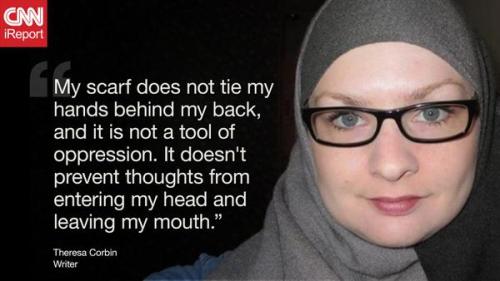 Click on the graphic to go to the CNN article.
 islamwich