Take Back Islam: No More Double Standards Part 1

Take Back Islam: No More Double Standards Part 1

Written by Stephanie Siam

The Double-Standard Dilemma: Part I

Jennifer* was a convert Muslimah. Though she had only recently reverted to Islam, she was always a modest young woman, trusted wholly by family and friends.

About a year after her reversion, she met Ali*. He was a few years older than Jennifer, but since she had always been an “old soul” she was okay with the age gap. After meeting with him a few times, under halal (permitted) conditions, they agreed to marry. She had asked him every question that came to mind about their respective roles as husband and wife, but because of her conservative pre-marriage lifestyle, Jennifer assumed the basic routine of day-to-day living would remain generally the same for her.

One evening Jennifer made plans with a friend for dinner. Prior to going out, she let Ali know her plans, as he was also going out with friends for the evening. As she wrapped her hijab, Ali popped his head into the bedroom.

Jennifer looked at his reflection in the mirror and smiled. “I’m excited to see my friend. I haven’t seen her since college. We used to sit together for hours, just laughing and talking.”

“I’m leaving now. What time are you meeting her?” Ali leaned against the frame, crossing his arms over his chest.

“About seven. Great! So we’ll probably get back home around the same time, I’m guessing.” She stuck a final pin into the side of her scarf, grabbed her bag off the dresser and turned to leave.

“No. I’ll probably be late. Maybe around eleven or later.”

Jennifer walked over to him and patted him on the cheek. “Me, too. I told you. . .we can sit for hours.”

Ali shook his head and laughed. “Are you serious? No way.”

She stepped back, confused. “No way what?”

“No way about you staying out until eleven. That’s no good. Women shouldn’t be out that late.”

Jennifer laughed to herself. “What do you mean? I’m not going out to a club. I’m eating dinner, sitting with my friend in a restaurant. Besides. . .you said you’d be home around eleven or later. What’s the difference?”

“The difference is I’m a man.”

muslim_man_and_woman_by_agent_ea-d2xhuea
ONE NIGHT ONLY: Woman vs. Man!


And so it starts. The beginning of a recurring theme running through many, many marriages.

The double standard.

Of course, we can’t just limit this to Muslims, or even Arabic culture (a major contributing factor to this issue to begin with). However, for the purpose of this blog, I am only looking at the concept of double standard within Islamic-based marriages. To focus discussion even further, I will limit my scope of criticism to three areas of double standardization:

  1. Expressing Anger
  2. Working Inside the Home
  3. Working Outside the Home


Expressing Anger

 

lucy and ricky

Somebody got some ‘splainin’ to do!

For those of you familiar with the I Love Lucy Show, the image above most likely conjures memories of hilarious scenes between the title character, Lucy, and her Cuban-imported husband Ricky, wherein Ricky spends a great amount of time chiding his naïve and childishly-scheming wife in a mixture of Spanish and heavily-accented English while wagging his finger in a patronizing manner.

This is met, in return, by a loud, whining, “Waaaaaaaaahhhhhhh,” by Lucy, who offers the iconic phrase with closed eyes and a wide-open mouth. Add in the later Technicolor effects of Lucy’s bright red hair and unmistakable lipstick and you’ve got one funny picture.

Of course, if you take a step back and look at the bare-bones story, you see an overly-patriarchal husband chastising his younger wife for something that may-or-may-not be completely her fault. (Well, to be honest, in Lucy’s case, it usually was her fault.)

But the point is, in watching the exchange between the animated couple you hardly ever see Lucy stand up to Ricky. She takes everything he dishes out with a (mostly) closed mouth. And even when she tries to get the upper hand, she does so in a silent, action-oriented manner. . .that often backfires (poor Lucy!).

For those of you who aren’t familiar with the show, you may be wondering why I’ve brought it up.

Because this model is played out in many modern Muslim marriages, in the spirit of “heading the household”, the stronger, usually male, personality takes over and expects all to follow his way.

Western female converts know this posturing all to well. Her more-likely-than-not foreign born husband or even her community believes that the her conversion has been a way for her to escape a “hellbound” culture of capitalism, consumption and hedonism. Clearly, when we become Muslim, there is no desire to maintain any ties to our own cultural identity. . .or we wouldn’t have converted, right? *Sarcasm*

sarcasm

For most, the first sign of the “elite male status” rears its ugly head during the first argument. Let’s assume, for the sake of argument, both husband and wife are converts (this gets rid of the sticky “in my culture” issues that always come up in an intercultural relationship).

Since we understand couples argue for a variety of reasons ranging from stupid to life-altering, let’s say the water bill didn’t get paid, and now the water has been disconnected. This wasn’t due to lack of funds. It was simply due to oversight by one or the other.

What follows is a typical experience for many female converts in terms of arguing with a spouse:

Husband: There’s no water. What’s wrong with the water?

Wife: I don’t know. Maybe the whole building has a problem?

Husband: I’ll ask the neighbor. (Leaves to ask neighbor. Returns.) They have water. It’s just us.

Wife: Maybe the pipe’s broken?

Husband: Did you pay the bill?

Wife: Was I supposed to pay the bill? Don’t you usually take care of that?

Husband: Did you remind me? Let me go see if the pipe is fused. (Leaves. Returns.) They fused the pipe.

Wife: I guess the bill didn’t get paid.

Husband: Why didn’t you remind me? I have a lot of things to do.

Wife: I also have a lot of things to do. I suppose I didn’t think about it.

Husband: That’s the problem. You don’t think about things that are important.

Wife: Of course I do. I’m just not used to thinking about things that I don’t usually take care of. Since you always pay the bill, I didn’t think about it.

Husband: A good wife reminds her husband about important things.

Wife: So, now it’s my fault because you didn’t remember?

Husband (raising voice): It’s your fault because you didn’t remind me!

Wife (raising voice in response): I’m not your secretary! Can’t you make a note of important things?

Husband (yelling): Don’t raise your voice to me! I’m your husband, and you must show me respect!
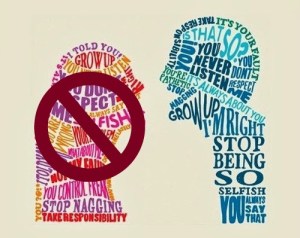
This is not ok
This is not okay

Wife (yelling back): Well, I’m your wife! Don’t yell at me!

Husband (increasing in volume): I am your husband, and I have the right to yell! But you will not speak to me this way! Do you understand?

Now, depending on the general temperament of the man and woman, this episode will escalate further with both getting out of control, or one person will eventually back down. But the question is: why does the husband believe it to be okay for him to raise his voice at his wife, but not for his wife to raise her voice in response?

Why are women – especially Muslim women – expected to be demure and soft-spoken, even when being yelled and cursed at by the person whom they are supposed to respect and trust most in the world?

Why are men allowed to give in to their human characteristics of anger and displeasure, while women are labelled “emotional” and told to contain their feelings?

It is only natural to want to respond in kind to someone when they verbally attack you, be it through volume or vocabulary choices. However, this is considered taboo, inappropriate or disrespectful of men when women get upset and show their feelings.

What ends up happening is that over time, the woman will start to exhibit traits of an emotional or psychological abuse victim. She will withdraw at the sign of argument, afraid to stand her ground, even when she is right to do so. Her opinions will become invalid, even to herself.

She will contain all feelings, positive and negative, until pent-up aggression and expression will cause her to be overcome with anxiety. And then she will not know where the anxiety stems from, as she’ll end up letting her emotions fly at the most mundane of incidents (see: opening a blister package for medication).

So, what’s the solution? Should women be able to yell back? Are women allowed to yell back? Are they allowed to get angry? To show their emotions like men do? Is it really the man’s right to dominate the situation and demand sovereignty in decision-making?

Rasoulallah.net reports:

Once, Aisha was angry at the Prophet – peace be upon him – so, he told her: do you accept Abu Obaida Bin Al-Jarrah as a judge between us? She replied: no, this man will not issue a judgment against you in my favor. He said: do you accept Omar as a judge? She replied: I fear Omar. He said: do you accept Abu Baker (her father)? She replied: yes I accept him.

This exchange shows that no matter how he viewed his own opinion in the matter, even Prophet Muhammad (saw) acknowledged his wife’s right over him to be fairly heard and express her feelings.

He didn’t yell and say, “I don’t care what others think. It’s my opinion that counts.”

Nor did he demand they go to the first person he suggested as a mediator. In fact, he didn’t stop offering names until he found one she agreed with. So, even in their disagreement, he wanted to make sure he found someone who would support her and be fair in their decision about the disagreement.

Additionally, Pakistani freelancer Sadaf Farooqi explains in his article discussing an incident where A’ishah (ra) was verbally attacked by her co-wife, Zainab (ra), in her own home :

He [Muhammad (saw)] did not – and this is a very important key point – exhort the wronged person to keep silent in the name of patience and restraint. He did not allow their oppressor to continue with their injustices. Rather, he made sure that the wrongdoing was not just stopped, but that the one who was wronged also defended themselves.

Even though Zainab (ra) was older than A’ishah (ra), the Prophet (saw) gave his approval for her to speak up about what was being said against her.

Truthfully, the answer is not in who is allowed to yell and who is not.

The answer lies in open communication. Understanding the right that both parties in a marriage have for expressing their opinions, being heard and trusting their partner with protecting (through mutually respecting) their feelings.

One person or the other dominating a relationship and holding the other emotionally hostage is the very definition of dysfunction. As we can see from the example, even our Prophet (saw) permitted his wives to have their say and defend themselves in an argument.

Instead of fighting – yelling, screaming, cursing or worse – couples must learn what works best for each of them when they’re upset or angry. This can take time, but the best answer is being open and honest.

If you need to blow off steam, that’s fine. But make it clear to your spouse this is needed. And then get away from them. It’s okay to unwind and calm down. It’s not okay to do it at the expense of another person’s well-being. And it is even more NOT OKAY to say that just because you are male Islam gives you the right to be an emotional bully. . .or worse.

*The couple mentioned in the story at the beginning are fictitious. Any similarity or resemblance to real people is unintentional.

Follow us (upper right of the page), email us (islamwich@yahoo.com), like our face with your face on Facebook, like the post, share it, pin it, comment on it, and/or do whatever social media magic it is that you prefer. Find out more about us in the understandably named “About Us” page and browse other posts in our “Table of Contents”.

What Would the Prophet Do?

What Would the Prophet Do?

Written by Stephanie Siam

As a human, I am deeply saddened by the tragedy that occurred in Paris this week. This senseless – yes, SENSELESS – act of violence will only serve to perpetuate greater global discord. Muslims around the world are now scurrying about in their PR hats doing damage control against the ignorant masses who still do not comprehend that the few involved in this heinous attack are no more acting on behalf of Islam than the Westboro Baptist Church acts on behalf of Christianity.

Case in point: A neighbor of Prophet Muhammad (pbuh) used to leave trash on his doorstep every day because he hated him (he wasn’t Muslim). One day, the Prophet went outside and noticed there was no trash. What did he do? He called upon his neighbor to find out why he hadn’t left any garbage at his door. It turned out the neighbor was sick. So, the Prophet sat with him a while to bring him good cheer in his illness.

Moral: If Prophet Muhammad himself didn’t retaliate against those who disrespected him by doing things much worse than drawing a picture, what makes anybody think they need to “avenge” him?

Upon Prophet Muhammad’s death, Abu Bakr (one of his greatest companions) said, “For those of you who worship Muhammad, he is dead now. He was just a man. For those of you who worship God, He will never die. He is eternal.”

It is important to remember the teachings of the Prophet (pbuh):  For those who take the life of an innocent person, it is as if they have killed all of mankind. And for those who save the life of an innocent person, it is as if they have saved all of mankind.

Which would you rather be claimant to on Judgement Day: saving all of mankind or destroying it?

I understand why Muslims feel offended by images of Prophet Muhammad (pbuh). Physical replications of the Rasool (prophet) are forbidden in Islam. Therefore, seeing drawings of him is offensive to many Muslims … especially when he’s got a turban full of TNT on his head. Or, astigfur God (may God forgive me), he is sans clothes in compromising positions with other people.

But, ironically, I don’t understand why other atrocities that are forbidden in Islam aren’t met with such fervent intolerance.

For example, we aren’t allowed to depict God, either; how could we? Nobody knows what God looks like.

Does this outrage you?

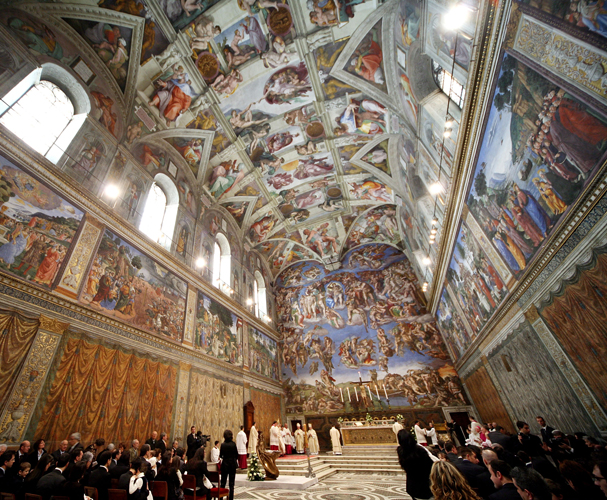
Yet, I haven’t heard of any Muslims getting in an uproar over Michelangelo’s Sistine Chapel painting portraying Adam and God touching hands.

And what about the cartoonization of Prophet Isa (Jesus, pbuh) on shows such as South Park? Why aren’t Muslims rallying for the destruction of this demeaning and offensive representation? It isn’t simply that drawing Prophet Muhammad is off-limits.

ALL of the prophets (literally innumerable, as God tells us in the Qur’an) should be revered, respected and not characterized by humans or sketches.

When I hear a joke that starts to include God, I like to change the subject. If I see a caricature of a highly-esteemed religious figure, I don’t laugh and promote it. I get bristled. I want to destroy the picture – by tearing it up and throwing it away.

But I don’t feel the need to punish the offenders. If you can even call them offenders.

See, the Qur’an calls for punishment of those who commit adultery. But we don’t see Muslims raiding homes. Killing men and women who have relations outside of marriage so as to protect the sanctity of Islam.

Those who get intoxicated in public are reprimanded and disciplined. But there are only a few dry countries in the world. And those that are dry know very well that their nationals depart to other countries along the borders on the weekend to fulfill their wants and needs.

Children, women and the infirm are dying – RIGHT NOW – in so many countries around the world. They are starving. They are homeless. They have no water. They are freezing to death. TONIGHT.

Does this outrage you?

Where are the outraged Muslims demanding their governments do something to change the status quo?

Because these are ALSO forbidden in Islam: adultery, alcohol, and ignoring the needy.

Do you know what the Qur’an does not sanction? Murdering people for drawing pictures of somebody you love.

Yet, there are still Muslims (and BY FAR NOT THE MAJORITY) who believe the most pressing issue in the world is some cartoonist in France who draws a cartoon of a religious figure.

Why do you think this is?

I think the answer lies within Abu Bakr’s wise words. Like Christians of the past and present, too many Muslims have departed from the path of righteousness. They have raised Prophet Muhammad (pbuh) to a status greater than what he was. Islam is about following the Qur’an and the Sunnah (teachings of the Prophet). But it absolutely forbids associating anybody with God. Yet, it seems many people have come a hair’s breadth away from committing this grave, unforgiveable sin (shirk).

I am reminded of a picture – an actual photograph – I saw online in conjunction with this story. It was an image of a

Does a crime against Islam actually exist?

poster that displayed several men’s names who were “WANTED: DEAD OR ALIVE FOR CRIMES COMMITTED AGAINST ISLAM”.

When I read those words, I couldn’t help but ask, “What are crimes against Islam?”

I understand crimes against man: murder, theft, assault.

I understand sins against God.

But I don’t understand how someone commits a crime against a religion.

There is nothing in the Qur’an that justifies killing someone because they don’t believe the same thing as you. There are appropriate punishments prescribed for crimes against man, as well as sins against God that promote the demoralization and collapse of society.

But sins against God in terms of belief and submission?

Those are not ours to punish for. We can not, nor are we permitted to, compel others to follow a teaching when God has not willed it. There is no compulsion in religion.

With that being said, I want to reaffirm my intense alarm and disheartening at the deaths of the Charlie Hebdo staff members. But I will not apologize for my beliefs or my religion. Islam does not support indiscriminate revenge in the name of God, Prophet Muhammad or anyone else. And I will not allow Islam to accept the blame for the actions of peaceintolerant, hatemongering humans.

Hate begets hate. Peace begets understanding.

I choose peace.

Assalamu alaikum.

Originally posted on CNN ireport.

You can also read Theresa Corbin’s CNN ireport here

Follow us (upper right of the page), email us (islamwich@yahoo.com), like our face with your face on Facebook, like the post, share it, pin it, comment on it, and/or do whatever social media magic it is that you prefer. Find out more about us in the understandably named “About Us” page and browse other posts in our “Table of Contents”.
Converts and the Holidays: Maintaining the Ties of Kinship without Crossing Islamic Boundaries

Converts and the Holidays: Maintaining the Ties of Kinship without Crossing Islamic Boundaries

Written by Stephanie Siam

I remember as a kid sitting in my family’s living room:

memories
memories

All the lights off, all the sounds off, watching the lights on the Christmas tree move through their rotation of red … to blue … to green … to white … with the decorations glistening in the electric glow. And then they rotated to off. And for a moment I held my breath, waiting for them to come back on, bringing me out of darkness, into a room of warmth and color.

I remember the first Christmas after I converted to Islam:

I was conflicted about what to do. I lived in the same city as a lot of my extended family. My immediate family was driving to Mobile for the holidays. There was a schedule of who to visit and where to go in the short time they were to be in town. And nobody knew I was Muslim.

The holidays – especially Thanksgiving and Christmas – have always been a kind of family reunion for my mother’s side of our family. When my grandmother was still alive, the dinners and get-togethers always centered around her house. With my mother at her side, she crafted delicious meals and traditions that still hold a soft place in my heart.

After her death, these two occasions became even more important to my mother. She needed to continue the tradition. She needed to feel like nothing had changed. And I didn’t want to be the one to break her heart.

Still, everywhere I turned, all I heard was, “Haraam. Haraam. Christmas is haraam.”

Do not try this at home

Now, before you jump the gun and assume I’m proposing Muslims deck the halls with holly to have a merry little Christmas – hear me out.

It makes very little sense to me for Muslims born outside of countries that celebrate Christmas (or natural-born Muslims, for that matter) to participate in festivities that are foreign to them. For example, even though Kwanzaa and Hanukkah are observed in the United States by people of their respective heritage and traditions, not all Americans take part in celebrating these occasions.

And unless someone converted to the observing religion or became part of a family that practiced such traditions, most people would think it strange for a person to participate in a festival outside of their own religion or family/cultural tradition.

So, with that being said, it is easy to see why many scholars lay out the blanket “Christmas is haraam for Muslims” statement, especially those that have never been outside of their own countries or experienced multiculturalism in their own lives and families.

Some of these same scholars also say it is “haraam” for women to drive cars, air conditioners to be used in the absence of husbands at home, and a person to change his religion. However, there has been much research and discussion about all of these, and other scholars have permitted the same things that others forbid.

While I understand the basis for scholars to say Muslims shouldn’t celebrate Christmas and its traditions – the purpose of Christmas, the religious affiliations it has, and the consumerism it promotes – to issue an all-encompassing ruling that also cuts ties between Muslim converts and their Western families is dangerous.

Most people are well-aware that Christmas has long since left its original “adopted” purpose (the birth of Prophet Isa/Jesus [pbuh]) and become more of a secular winter festival celebrating snow, Santa Claus, and uncontrolled spending. Even if there are religious aspects of the holiday still observed by families, they hardly ever take place on the day of the celebrations – unless it falls on a Saturday/Sunday – and they are not usually at the forefront of the occasion.

The truth is, Christmas has become a secular, cultural tradition where families get together to socialize, eat and make memories.

family, food, and fun (or fights)

Accordingly, many Muslims who converted from Christianity understand this. Many converts from other religions (or none of them) also get this picture. The ones who don’t seem to understand are the scholars issuing fatwas (religious rulings) on issues outside the scope of their culture or experiences.

Again, let me be clear:

I don’t think it is okay for Muslims (natural-born or converts) to go to church and praise services in celebration of Christmas. To attend Christmas mass, Christmas Eve prayers or take part in the Christmas cantatas (live depictions) of the Nativity (the Biblical account of Jesus’ birth) – no matter how much we Muslim ladies resemble the Virgin Mary – is not cool. Or Islamic. In fact, it’s probably bordering on shirk.

But there’s an issue that natural-born Muslims don’t understand – and quite often judge – about us converts. Despite adopting a new religion, embedding ourselves in foreign languages and cultures, and attempting to reconcile our previous lives with our new ones, we still have family members. We still have people that love us – or at the very least want to understand us.

And the beauty of Islam is that even though we’ve accepted this new way of life and worship, we aren’t supposed to cut ties with the ones who birthed us, raised us, supported us and loved us from the beginning.

OnIslam respondent Dr. Jamal Badawi, Member of the European Council for Fatwa and Research (ECFR) and the Fiqh Council of North America, explains:

Participating in the non-religious aspect of Christmas such as family reunion dinner or visitation is OK. Attempts should be made to avoid situations where alcoholic drinks are served on the same table. Kindness to parents and family without compromising one’s beliefs is an Islamic duty.

During socialization and whenever appropriate, one may share one’s thoughts [on religion] with them, preferably in answer to their questions or comments without being too argumentative.

In fact, in terms of greeting others and giving gifts: this is actually sunnah (actions recommended/practiced by Prophet Muhammad [saw]). No, I am not saying the Prophet (saw) brought Christmas gifts to his Christian neighbors. However, Allah (swt) does instruct us to return greetings to others in kind or better:

When you are greeted with a greeting, greet in return with what is better than it, or at least return it equally… (An-Nisa 4:86)

Additionally, the European Council for Fatwa and Research suggests this action becomes obligatory when non-Muslims congratulate Muslims on the occasion of Eid al-Fitr or Eid al-Adha. Therefore, if your neighbors customarily acknowledge you on your Islamic holidays, it is perfectly okay to wish them well on theirs in the spirit of maintaining community and friendship.

With regards to gifts, the ECFR explains:

There is also no objection to accepting gifts and presents from them, and to return their gifts in kind, on

I love a presie anytime of year!
I love a presie any time of year!

condition that these gifts are not unlawful in themselves, such as being alcohol or pork. The Prophet (peace and blessings be upon him) accepted the gift of the King of Egypt and several others [. . .] .

Interestingly enough, the person who had the most influence (beyond Allah, alhumdulillah) in my conversion to Islam gave me a Christmas present the first year I knew her. I remember this action often, as it reminds me of how I was invited into Islam in a gentle, encouraging manner — the way we should bring others.

Finally, one of the first things Muslims learn as a child is the status of mothers in Islam. It does not differentiate between the religion of mothers; the only stipulation is the mother cannot enjoin the child to go against Allah. This means, while you must respect and obey your mother and father, you must also remain true to Islamic teachings.

If your parents are trying to force you to go to church with them, or to remove your hijab, or drink alcohol or eat pork, then you should certainly avoid these situations. But if your parents only want you around to visit with them, to share in memory-making as a family, to eat some yummy food and enjoy a nice cup of apple cider by the fireplace, why isn’t this okay?

Idris Tawfiq, in his article “Happy Holidays”, best expresses my sentiments when he says:

If we know in our hearts that we are not celebrating the religious side of the feast, perhaps even declaring this in our own du`aa’ [sic] on the morning of Christmas itself to reassure our newfound faith, we have nothing to fear by taking part in a celebration of family and friends.

Indeed, there are several varying opinions on this issue. I am not saying that one opinion is more correct than the other. However, when it comes to me, I take the side of strengthening the ties of kinship, showing my relatives the positives of Islam (such as generosity, kindness to family and respect for others’ opinions and faiths) and praying that one day, we can all celebrate Eid al-Fitr together. As Muslims, insha’Allah.

Note: My intention with this article is not to encourage Muslims to start decorating their houses with lights, putting up trees in their living rooms or singing Frosty the Snowman when the first snowfall comes. If anything good comes from this article, it is from Allah. And if anything wrong appears, it is from me. And I ask Allah to forgive me of any misunderstanding I have or cause.

Follow us (upper right of the page), email us (islamwich@yahoo.com), like our face with your face on Facebook, like the post, share it, pin it, and/or do whatever social media magic it is that you prefer. Find out more about us in the understandably named “About Us” page and browse other posts in the “Table of Contents”.

We Interrupt Our Regularly Scheduled Program for NaNoWriMo

We Interrupt Our Regularly Scheduled Program for NaNoWriMo

Written by Stephanie Siam

As some of you may know and many of you may not, November is

National Novel Writing Month (NaNoWriMo)

I know, I know. You may be thinking:

“Wait. . .what? Isn’t this islamwich? Where is the straightforward, no-spin, thought-provoking content I usually find?”

Have no fear!

For those of you who’ve been with us for awhile, you’re most likely no stranger to the eye-catching logo that crowns the top of the islamwich homepage. If you’re new, check it out. Go ahead. I’ll give you a second.

As you see, the goal of this blog is to reflect the diverse identities of not only the writers who contribute here, but also the unique characters who make up the Muslim population (or ummah) overall: one slice Muslim, one slice ‘merican, and all that comes between.

It is in this “between” area that I locate myself for this post. I am very much Muslim, alhumdulillah (all thanks and praise to God). I am also very much ‘Merican. Most of the time.

But besides these, I also align myself with a very prominent identity that is in part fulfilled by my (occasional) contributions to this blog: writer.

Sure, you’re thinking:

“Well, of course you’re a writer. I’m reading what you write. Right now.”

True. But that doesn’t make me a writer. There are tons of bloggers who blog as a hobby, but their interests, careers or jobs reflect otherwise. Like cooking. Full-time parenting. Home-schooling. Photography. Auto mechanic. Everyday-run-of-the-mill-genius-extraordinaire.

And, if merely judging by my career (thus far), you would probably define me as a teacher. If I’m lucky, you’d specify “writing teacher”. But that’s what actors refer to as “my day job”.

Yet, how I identify myself and define my purpose is writer.

Forget that my graduate degree is actually in writing. Forget that I’ve been typing (or penning) words on paper since as far back as I remember. Forget that the voices in my head can usually be attributed to unfinished (or not-yet-started) conversations between usually-unmet characters.

Writing is how I live my life. It is how I deal with my problems. It is how I express my beliefs, connect to others, bridge the gap between the introvert I know I am and the extrovert I sometimes pretend to be. How I glorify my God because He blessed me with the ability to string words together in a somewhat-convincing and creative manner. Without writing, I lose my mind.

Literally.

After going a period of time without writing, my vocabulary dwindles. My ability to express thoughts becomes mangled. The inner solace I find simply by releasing emotions I don’t feel comfortable with voicing dissipates. Writing is my release. It is my therapy. My outlet.

But most of all. Writing is my advocate.

How can something intangible be an advocate?

Simple:

  • Because my writing supports my mental health, it is my counselor.
  • Because my writing improves my vocabulary and forces me to thinks logically, practically, rationally, it is my teacher.
  • Because my writing represents me and holds my truth, it is my representative.
  • Because my writing shares with others what I might not be able to express otherwise, it is my backer.
  • Because my writing bridges gaps between myself and others, it is my intercessor.

And as a writer, I know the positives engaging in this often-marginalized activity can produce.

Which is why I am advocating for YOUR participation in National Writing Month.

Now, I know it is November 15th – and yes, National Novel Writing Month is halfway finished. But that doesn’t mean you can’t get started. Who knows? Perhaps you will break the dam that holds back your fountain of prose.

Don’t know what to write about? I suggest choosing something that is important to you:

  1. If you’re a revert, write about your “transformation” into a Muslim
  2. If you’re not a revert, write about your life growing up Muslim in a non-Muslim country
  3. If neither applies, write about a topic that is dear to your heart – fiction, nonfiction, it doesn’t matter

And if you don’t write, you can still participate.

See, National Novel Writing Month isn’t just a trend where people slack off from work and focus on their would-be best-sellers (I wish!). The organization is also a verified 501(c)(3) non-profit that supports various writing advocacy programs, such as Young Writers Program. Additionally,

National Novel Writing Month organizes events where children and adults find the inspiration, encouragement, and structure they need to achieve their creative potential. Our programs are web-enabled challenges with vibrant real-world components, designed to foster self-expression while building community on local and global levels.

Therefore, NaNoWriMo participants are also encouraged to act as fundraisers in support of NaNoWriMo’s mission.

And this is where you come in.

You may not be a writer. You may not even like to read (other than islamwich articles!). But hopefully, you can agree with and understand the importance of advocating for literacy and self-expression among children and adults in both local and global communities.

To learn more about how NaNoWriMo contributes to creative development worldwide and/or donate to this cause, you can visit Stephanie’s NaNoWriMo Fundraiser.

Note: All donations go directly to NaNoWriMo for disbursement via the 501(c)(3)’s regulations.

Follow us (upper right of the page), email us (islamwich@yahoo.com), like our face with your face on Facebook, like the post, share it, pin it, comment on it (Sorry, due to the significant increase in hate messages I have received over the past month, comments are currently closed.), and/or do whatever social media magic it is that you prefer. Find out more about us in the understandably named “About Us” page and browse other posts in our brand spanking new “Table of Contents”.

Respect Me, Don’t Objectify Me

Respect Me, Don’t Objectify Me

why do women cover
graphic by Nicole Elmasry

Written by Stephanie Siam

When I started wearing hijab about 10 years ago (more or less), I did it out of sense of duty to Allah.

I believed – and still do – that Allah commands us to dress modestly and appear a certain way in public or in front of non-mahram (non-familial) males. Since I was new to Islam, I wasn’t completely aware of the injunctions he also placed on men to dress and behave in their own form of modesty. I’ve since learned that – shockingly! – men, too, must dress appropriately when in public or around non-mahram women. We can save the societal double-standards discussion for another day.

As any new hijabi knows, it takes a while to get the hang of wrapping yourself in a scarf every day. I’m not talking about the temperature. I’m not even referring to the mental fortitude one must develop to go out in public dressed extremely different than the cultural norms of society (depending on where you’re from).

I’m talking about the literal act of wrapping the hijab. Not getting it to fall off. Or choke you. Or look like you took a giant curtain and twisted it around your head. Or just gave up and piled a bunch of material on top. Or – my personal favorite – like you stuffed your head in a pillowcase and cinched it so tight your cheeks turn purple.

As time passed, I became more accustomed to the art of scarf-wrapping. In fact, I can now do it without looking in the mirror – an amazing feat, if you ask me.

Still, there comes a time when, despite my attempts at keeping everything covered the way it should, the scarf shifts and a bit of (ah!) sin skin peeks out. On these rare occasions, I usually have my reliable husband around to say, ever-so-bluntly, “Your meat is showing.”

My meat.

And, once again, I realize even though I’ve taken care to display the most modest appearance possible (for me), I’m still taking the chance someone might get a glimpse and ogle me. All at once, I am relegated to the display case in a butcher shop. Something men can stare at, drool over (yeah, okay) and decide whether to take home or skip over.

While I do my best to remind the hubs that it’s called “skin” and not “meat”, and that I’m not a piece of it, when I see others making ridiculous comparisons between women who wear hijab and those who don’t, I do my best to change the discourse. Or at least draw attention to the oversimplification and objectification that such comparisons promote.

Case in Point:

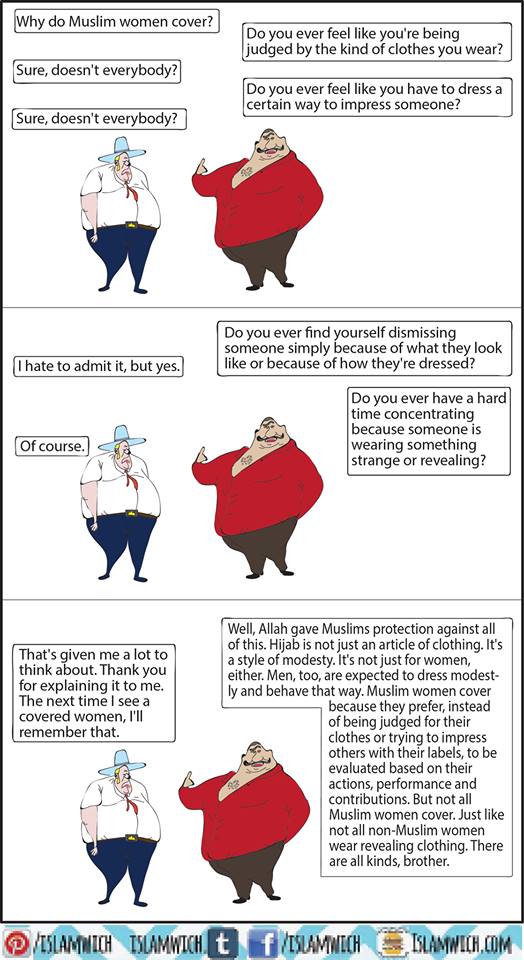
While doing my work scanning Facebook the other day, I came across the following cartoon that had been posted on a Christian/Muslim debate page by Sara Hassan Walid.

women are apples now?

Beneath her post was the question: “Make sense now?”

I read the cartoon several times before I finally responded: “No, it doesn’t make sense. Who covers apples, anyway?”

At the time, I was just making a statement. I didn’t realize why the cartoon so badly rubbed me the wrong way. Was it the colors? The word choice? The over-patriarchal man dressed in what looks like his sleeping gown and slippers? Finally, it occurred to me.

In all sincerity, the whole cartoon makes it seem like men have devised this way of concealing something of importance (I would’ve chosen something more precious….like a diamond, as per usual). However, wearing hijab is not something men came up with to protect and conceal things. Hijab is a commandment of Allah, and He decreed it as protection from unwanted advances and for modesty purposes.

The cartoon nearly comes to the point of having men claim ownership of the idea of hijab. Astigfur Allah!

Next, and probably most glaringly, the tactic of comparing modesty to an apple is ridiculous. First, there is no direct connection. Second, it simplifies the beauty and ultimate purpose of the hijab. Third, an apple can be washed off if it gets physically dirty, as can a person. However, hijab does not prevent a person from getting spiritually dirty (sinning) any more than a cloth keeps an apple from rotting on the inside. The whole analogy is just…….

In other such cartoons, the comparison has been between women and pearls or diamonds (or other precious items). At least this is slightly more connected. The purpose in covering a diamond is to protect it from….jealousy, coveting, theft (a more synonymous analogy, albeit still personally offensive).

But the purpose in covering fruit is to keep it clean, right? To stop it from spoiling?

My problem with the analogy is not that it encourages hijab. It’s the insinuations:

1) Men “cover their women”. Men don’t do this. Sure, some men do out of jealousy or control issues — but the commandment to cover comes from Allah, not man. This cartoon plays into the stereotype that Muslim men “make their wives cover”. This is wrong.

2) “Covering an apple” (or diamond, as previously stated) would be to keep it clean. Now, it’s just plain naive to think wearing hijab keeps a woman “clean” (sinless, pure, modest, chaste … whatever you want to associate “clean” with). And it’s offensive to say that just because a woman doesn’t wear hijab means she’ll be “dirty”. This analogy feeds into the stereotype that men “pick” women based on cleanliness (purity, virginity, sinlessness (?!?!), demureness). Well, shouldn’t this go both ways? Where is the cartoon about a Christian woman (as this cartoon is labeled Christian vs. Muslim debate) asking a Muslim woman why they “make their men wear long beards” or “make their men wear thobes (Islamic dresses for men) to the ankles”?

The problem with the whole cartoon is that it feeds into stereotypes … stereotypes, in fact, that cause people to dislike Islam (men controlling women, oppression of women, women are less than men) in general. When these types of cartoons are shared, it propagates the idea that life (especially in the Muslim world) is all about “men choosing (and for) women”. This relegates women, once more, to the position of property and removes their humanity (which happens as it does in any part of the world, but is not an Islamic concept.)

Why can’t the cartoon say:

Man 1: Why do Muslim women cover?

Man 2: Do you ever feel like you’re being judged by the kind of clothes you wear?

Man 1: Sure, doesn’t everybody?

Man 2: Do you ever feel like you have to dress a certain way to impress someone?

Man 1: Sure, doesn’t everybody?

Man 2: Do you ever find yourself dismissing someone simply because of what they look like or because of how they’re dressed?

Man 1: I hate to admit it, but yes.

Man 2: Do you ever have a hard time concentrating because someone is wearing something strange or revealing?

Man 1: Of course.

Man 2: Well, Allah gave Muslims protection against all of this. Hijab is not just an article of clothing. It’s a style of modesty. It’s not just for women, either. Men, too, are expected to dress modestly and behave that way. Muslim women cover because they prefer, instead of being judged for their clothes or trying to impress others with their labels, to be evaluated based on their actions, performance and contributions. But not all Muslim women cover. Just like not all non-Muslim women wear revealing clothing. There are all kinds, brother.

Man 1: That’s given me a lot to think about. Thank you for explaining it to me. The next time I see a covered women, I’ll remember that.

convo
graphic by Nicole Elmasry

Isn’t that a better conversation? It asks specific questions, clarifies purpose and intent, and also spreads positive knowledge about Islam and modesty.

Maybe I’m taking this way out of proportion. However, the cartoon rubbed me the wrong way (as you can obviously tell), and I try very hard to spread positive images and positive knowledge about Islam to non-Muslims and fellow believers alike. Not because I think I know more, but because I think there is more to the discussion than the trite explanation given in a two-line exchange. (exhale)

Bottom line, hijab is more than just a cover. And women are more than just objects that need to be “kept clean”.

Oh … and just for a final blow … I can’t stand the image of the non-Muslim man.

It looks like someone photoshopped a banana out of his hand. Like he was walking by, eating a banana, and asked this question — which prompted the answer using the analogy of fruit.

And, in any matter, if the writer HAD to use fruit … a banana would’ve been better.

Follow us (upper right of the page). Email us (islamwich@yahoo.com). Like our face with your face on Facebook (facebook.com/islamwich). Tumble with us on Tumblr (islamwich.tumblr.com). Pin with us (pinterest.com/islamwich). Follow us on twitter (@islamwich).

Like the post, share it, pin it, comment on it, and/or do whatever social media magic it is that you prefer. Find out more about us in the understandably named “About” page and browse other posts in “Table of Contents”.

From My Back Porch: Oman vs. the U.S.

From My Back Porch: Oman vs. the U.S.

Written by Stephanie Siam

As summer winds down, and my daughter and I start planning for our return trip across the sea to our home-away-from-home – Oman – I find myself caught in nostalgic daydreams about what I’ll miss when I leave the United States for another year.

Then I’m interrupted by the sound of two kids screaming – the younger has pulled the older one’s hair, and she’s traumatized greatly – and dogs barking (yes, my family has two of them. . .but it’s not my house, so there’s nothing I can do about it), and I run into the living room, narrowly missing what could have been a painful outcome as I jump over the pile of toys strewn around the floor.

I catch my breath, calm the older one (mine) and remind the younger one that ‘we don’t pull hair’. In response, he laughs and runs away. The older one still sniffles.

Keep Calm and Live in Oman
The national tag line of my host country

This isn’t a situation we encounter back ‘home’ in our three-person household. Nobody is pulling hair, and there are no animals running around. Even the toys have their own space, and they’re corralled there most of the time thanks to two OCD parents and a spare room off the family area.

The fleeting thought runs through my mind, “… only a couple more weeks … then everything will be in its place …”

Then I’m daydreaming about hanging all the clothes up where they belong – in our closets – and not having to go through piles of them due to limited space in an already overflowing closet.

And I smile at the thought of rounding up all the toys and returning them to their room, leaving the living area clean and clutter-free. But a quick glimpse out the kitchen window reminds me of what we’re leaving behind, again, when we board the plane to the East.

The truth is, Oman is an awesome place to live. It’s truly an ideal location for me and my family – for now.

It’s an Islamic country, but everyone is free to be themselves and worship according to their own beliefs. There are lots of things to do, from cultural festivals and performances at the opera house to hiking and swimming in the wadi (a wadi is a valley between two mountains; they are usually very lush, full of greenery, and have a river flowing through them), from camel-riding in the desert to shopping and movies and more.

The scenery is amazing, with views of both the mountains and the sea from my neighborhood. And I can’t forget to mention the natives. As a whole, Omanis are quite possibly the most welcoming, humble, and genuine humans on this planet – no embellishing!

But it never fails, whether I’m here (in the USA) or there (in Oman), I find myself comparing my two ways of life. Of course, whenever I’m one place, the other life seems to float away out of reality. However, once the plane lands (hither or thither), I’m brought back to the reality of my ‘current’ home and all it has in store.

So, I’d like to share just a few parts of my life I always find myself comparing when I’m in the opposite location:


In the left corner, we have. . .
graphic by Nicole Elmasry

1. Food Shopping

Oman has virtually every kind of shopping store you may desire. There are open-air fruit and vegetable markets (I’ve never been to one, but my daughter said they smell “horrible”), corner convenience stores (called bakala), mid-size grocery stores and HUGE hypermarkets (think Wal-Mart or Target).

Some of the grocery stores are import-focused. While imports are usually ridiculously expensive (cereals, especially), you can sometimes get a good bargain on items that remind you of home. Sometimes, though, you just get a craving … and you either do without, or you turn into some kind of Betty Crocker-fiend trying to reinvent the recipe.

Despite having a plentiful selection of foods available to us in Muscat, it never ceases to amaze me at how overwhelmed I am by the sheer volume of choices that can be found in American supermarkets. Walking into (insert any grocery store or superstore name here) usually leaves me slack-jawed at what is available for reckless consumption.

Anything the heart could desire – or fathom – can usually be found. And I always thought the food in the US was expensive, but it turns out, there are plenty of cheap choices on every shelf. Now, they may not be healthy, but that’s another issue altogether.

I always look forward to going shopping with my mom upon return to the States. Sure, I grab a few ‘old’ faves to revisit memories, but I generally just love to walk around and look at the possibilities.

2. Outdoor Play Area

The view from my kitchen window in our apartment in Oman is the (kitchen? bathroom?) window of our neighbor in the adjacent building. From our living room window, I can see the top of the gardener’s hut in the neighbor’s back yard. The courtyard next to our building is cobblestone and cement. There is a rickety, rusty old swing set and slide that sits in the corner of the walled-in area.

We don’t allow our daughter to go downstairs alone. It’s not that we think she’s in danger of being taken, but I just think she’s in danger of being hurt. Aside from the non-friendly kid area, the front of the building is overrun with cars – both parked and driving up and down the street.

I shiver at the thought of her running out into the street. So, unless we’re with her, she stays inside. We do take her to the park a couple of times a week, if the weather is nice.

From the window in my parents’ kitchen in the US, I can see the green backyard surrounded by the privacy fence. The grass is usually mowed because it seems to be my father’s favorite pastime (along with washing cars … ????), and there is enough seclusion that I can even sit out there in ‘comfortable’ clothing without being seen.

Out the front door is the front yard, also green and frequently mowed, a couple of rockers on the porch and the smooth asphalt of the interior street of the subdivision. There aren’t many cars that drive up and down the street, and when they do, it’s slowly.

Though I don’t let her play in the front yard alone (due to fear of her being taken … thanks crazy people!), she can go out in the backyard anytime she wants. And she does. And I can go with her – or I don’t have to. And it’s something I miss when we’re in Oman.

3. Just Chillin’

It is no joke when I say Oman is a laid back place. Everything in its own time. Nobody’s in a rush. Why do today what you can put off until tomorrow? Or, as some Muslims tend to say, “Insha’Allah…….” (in this case, meaning ‘eventually’ instead of ‘if God wills’). It’s nice to finish work and go home, sit with my family and relax.

Even my work is generally non-stressful. I teach 4 hours per day, and most students are respectful and kind. It’s a great place to live and work, as I’ve said before.

Maybe because I’m only here in the US for a short time, or maybe because my family isn’t a bunch of introverts like I am, but from the moment we hit the ground in Tennessee, I feel like I’m always on the run. With shopping, running errands, and most recently a load a doctor appointments, and don’t forget two kids (daughter and nephew) and the regular game of feed, clean and nurture that comes with being a mom, I feel like we never, ever stop.

By the time I get to sit down and just take a deep breath, it’s almost time to put everybody to bed (hence, why I’m writing this at … 3 AM?!?!) The only time I’d be up this late in Oman is if I was watching a reallllllly good movie or if I had insomnia. But here, this is my chill-out and re-energize time that I need as an introvert.

So, looking at just these three aspects of life, I ask myself: where do I prefer to live?

The answer: both.

I love that my daughter is getting the opportunity to learn about different cultures by living in other countries. And I love that when we’re in the States, she’s acclimated to my family’s lifestyle, too.

Sure, there are positives and negatives about both places. I wish we had a green area nearer to our apartment that was safe for her to play outside. I also wish our time in the States could be less rushed and more relaxed. But for now, we’re making it work. Alhumdulillah.

Follow us (upper right of the page). Email us (islamwich@yahoo.com). Like our face with your face on Facebook (facebook.com/islamwich). Tumble with us on Tumblr (islamwich.tumblr.com). Pin with us (pinterest.com/islamwich). Follow us on twitter (@islamwich).

Like the post, share it, pin it, comment on it, and/or do whatever social media magic it is that you prefer. Find out more about us in the understandably named “About” page and browse other posts in “Table of Contents”.

Letter to Palestine: An Appeal for Forgiveness

Letter to Palestine: An Appeal for Forgiveness

Written by Stephanie Siam

Dear Palestine,

In the midst of your continuous struggle to overcome oppression, You are never far from my mind. During my days, I think of You. During my nights, I dream of You.

But I’ve never been good at writing inspirational messages or condolences.

Therefore, the only thing I can say is: I’m sorry.

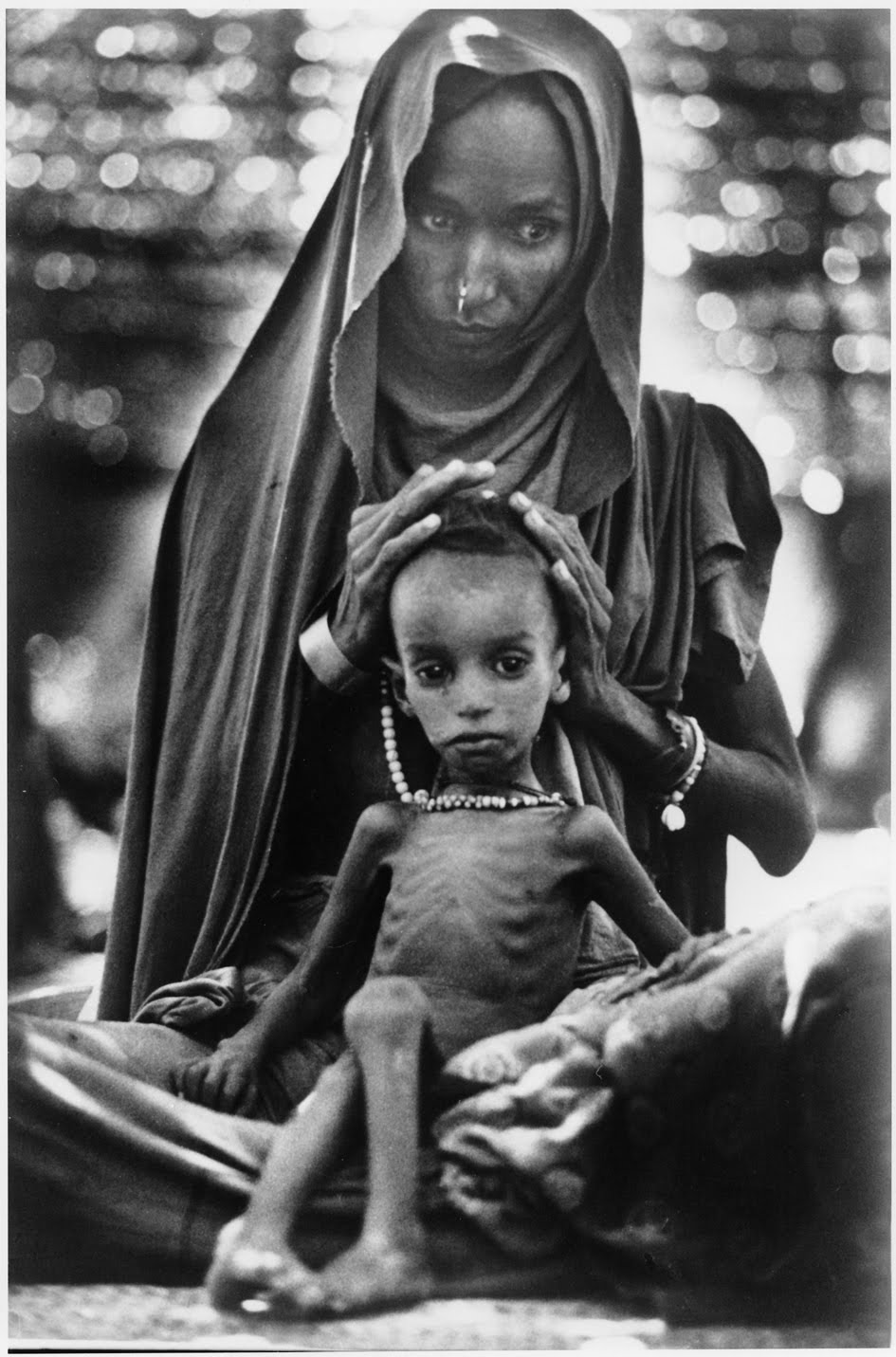
To the mothers and fathers who only yesterday tucked their little ones into bed, making dua’a that they would see the light of this morning, I’m sorry for your irreparable losses, those of which will never be forgotten or consoled away. Those which make you stand on your roofs and in the streets, unafraid of looming death, as no death could compare in pain as that of losing a child.

To the children, the orphans, who will never again know the warmth of their mothers’ arms and the strength of their fathers’ embraces, I’m sorry I can’t be there to hold and comfort you. I’m sorry I can’t bring you into my own home, to provide you with safety, love, and stability, to erase the fear from your lives and the emptiness from your hearts.

To the injured and sick, I’m sorry I cannot provide you with appropriate health and medical care, with supplies and safe havens to recover. That I can’t deliver border passes to cross into the West Bank or Egypt, to escape the terror and bolster any chance you have for recovery or survival.

To the oppressed and grief-stricken, to the refugees and homeless, I’m sorry for being unable to stop these atrocities on your lives, your land, your homes, your history, your being.

Dearest Palestine, I’m sorry that with each passing day, more of your story, present, past and future, is wiped out of existence by an enemy hell-bent on Your destruction. Though I’ve never seen your markets, felt your grass or touched your magnificent olive trees, I am connected to You. I am Palestine.

Above all, dear Palestine, I respect and look up to you and your people. Those who, for nearly a century, have been weighted down by the constant pressure of apartheid and occupation. Those who, despite their maladies, still play on the beach and in the park. Those who, despite their hardships, observe Ramadan and celebrate Eid as though the explosions overhead were coming from fireworks, not bombs.

Those who, in the face of evil and its ever-presence, cry out, “We will not be defeated! We will never back down!”

May Allah grant you mercy and respite from this onslaught of terror, and may His punishment be fulfilled in a swift and just manner. For Allah is truly the Most Beneficent and Most Judicious of all, and His will is always done. He does not change His mind or alter His promises. For that, dear Palestine, we can be joyful. For that, dear Palestine, we can rejoice. For Allah promises Jannah to those who fight in and die for His cause. For you, my dear brothers and sisters, are the muhajaddin, and may you be duly rewarded for your obedience and suffering. Ameen.

Follow us (upper right of the page), email us (islamwich@yahoo.com), like our face with your face on Facebook, like the post, share it, pin it, comment on it, and/or do whatever social media magic it is that you prefer. Find out more about us in the understandably named “About Us” page and browse other posts in our brand spanking new “Table of Contents”.